Thermo Fisher
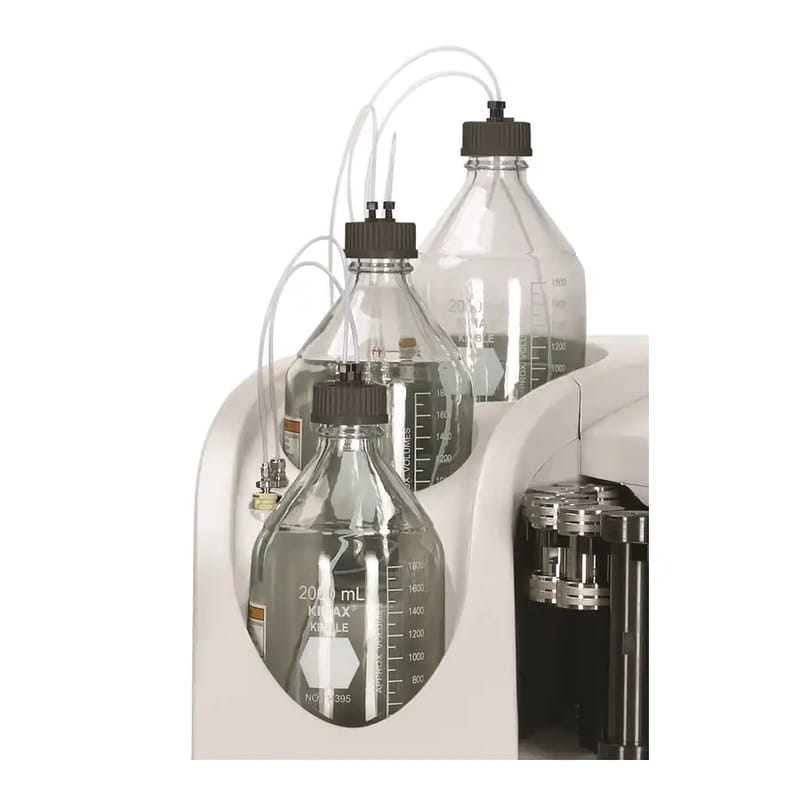
1L Solvent Bottle for Dionex™ ASE™ and AutoTrace™ Systems
SKU · 045900

This page brings together Thermo Fisher’s solid phase extraction solutions—SOLA/SOLAµ, HyperSep, and Hypercarb—so you can quickly choose sorbents, formats, and accessories that fit your matrix and throughput. As a distributor, Iright supplies a wide range of Thermo Fisher SPE products with local support and flexible sourcing.

Before you inject, you need cleaner extracts and predictable recoveries. SPE selectively retains interferences and elutes targets in a suitable solvent, reducing matrix effects and ion suppression while concentrating analytes. The result is higher sensitivity, more stable baselines, and fewer reruns in quantitation workflows.
You’ll find three complementary product families that cover non-polar to highly polar analytes and from low-volume plates to large-bed cartridges. Start with a quick map of the range, then drill into formats that fit your sample volume and throughput.
SOLA / SOLAµ (polymeric, fritless): high reproducibility for small volumes; available as 10 mg/1 mL cartridges and 96-well plates across HRP, SCX/SAX, WAX/WCX chemistries.

HyperSep (silica & polymeric phases): broad portfolio—C18/C8/Phenyl/CN/Diol/Silica plus ion-exchange (SAX/SCX/WAX/WCX) in cartridges and plates.

Hypercarb (porous graphitic carbon, PGC): retains very polar and isomeric compounds where conventional silica or polymer phases struggle; available in 96-well plates and cartridges.
Match chemistry to analyte and matrix, then choose a format that fits your volume and automation. When in doubt, screen a reversed-phase and an ion-exchange option first; add PGC if your targets are highly polar or hard to separate.
Reversed-phase (C18 etc.): for non-polar to moderately polar compounds; robust general start for food, environmental, and many small molecules.

Ion-exchange (SAX/SCX/WAX/WCX): for charged analytes; tune pH to control retention and selectivity in biological or complex matrices.

PGC/Hypercarb: for very polar metabolites, nucleosides, positional isomers; strong shape-selective retention improves resolution.
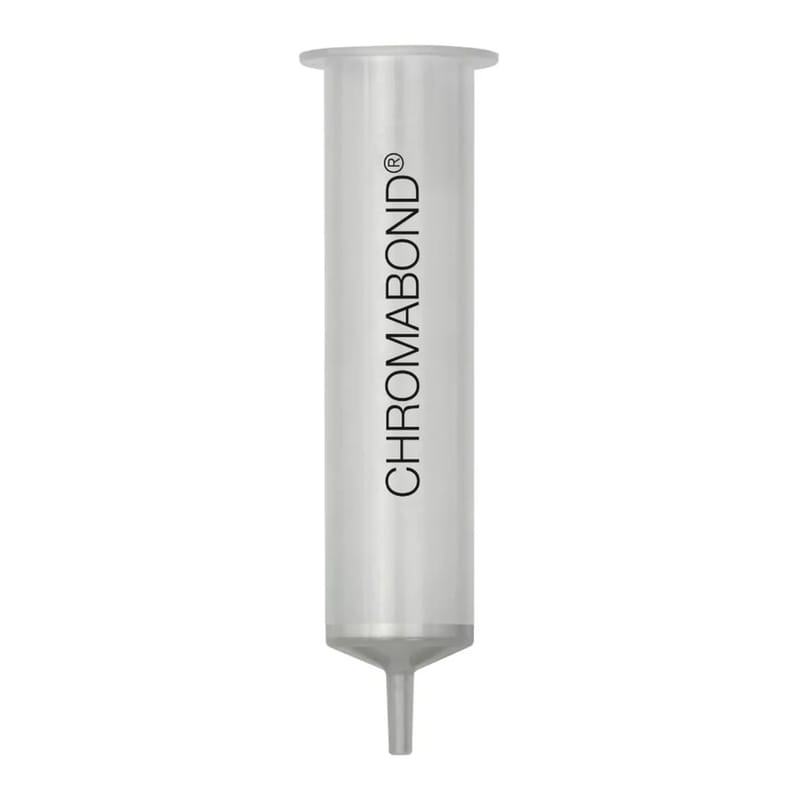
Format: cartridges (1–25 mL) suit method development and higher sample mass; 96-well plates (e.g., SOLAµ, Hypercarb) boost throughput and support automation.
Small procedural tweaks prevent channeling, bed collapse, or breakthrough. Maintain a consistent retention mechanism throughout the elution process, adjust the solvent strength progressively, and utilize controlled flow to minimize variability.
Condition/Equilibrate with solvents that wet the sorbent and establish the retention environment
Load at moderate flow; avoid precipitates by pre-clearing viscous matrices
Wash with weak solvents or buffered solutions that remove the matrix without eluting the targets
Elute with stronger or pH-adjusted solvent to disrupt retention; collect minimal volume for sensitivity
Positive-pressure processing helps keep flow uniform across all positions.
Below are representative, verifiable SKUs to anchor internal links and on-page filters. Use them as featured items, then branch to child collections by series, phase, and format.
| Series | Sorbent / Phase | Format | Bed Weight & Volume | Catalog No. |
|---|---|---|---|---|
| SOLA | SCX (mixed-mode strong cation exchanger) | Cartridge | 10 mg / 1 mL, Pack of 100 | 60109-002 |
| SOLA | HRP (reversed-phase polymeric) | Cartridge | 30 mg / 3 mL, Pack of 50 | 60409-001 |
| SOLAµ | SCX | 96-well plate | 2 mg / 1 mL | 60209-002 |
| HyperSep Hypercarb | PGC | 96-well plate | 10 mg / well | 60302-606 |
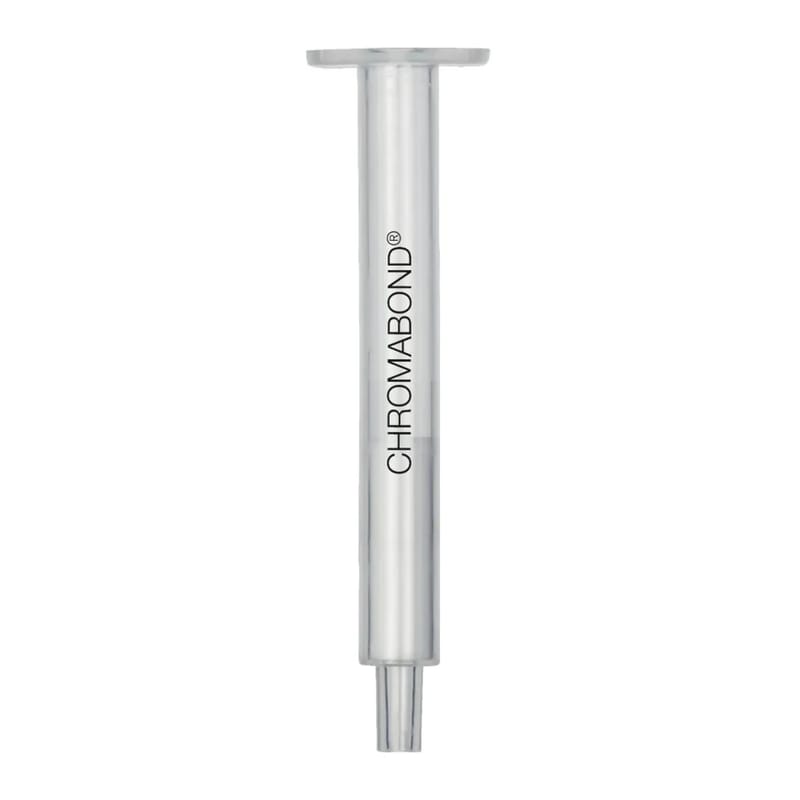
| HyperSep C18 | C18 | Cartridge | 100 mg / 1 mL | 60108-302 |
Use application-first cards to guide users from matrix to sorbent and format, then to the right accessory or automation. This also surfaces long-tail queries naturally—without keyword stuffing.
Bioanalytical LC-MS (plasma/serum/urine): SOLA/SOLAµ HRP or mixed-mode (WAX/WCX/SCX/SAX) to reduce phospholipids and improve reproducibility in low-volume workflows.
PFAS / Environmental water: HyperSep reversed-phase or WAX/WCX where applicable, paired with Dionex™ AutoTrace™ 280 or AutoTrace 280 PFAS for automated large-volume enrichment.
Food & forensic extracts: Start with C18; add ion-exchange for interferences; consider Hypercarb for highly polar residues or isomeric analytes challenging on silica.
After consumables selection, consistent flow control and unattended runs raise throughput and data quality. Choose accessory hardware that matches your sample volume, labware, and cleanliness requirements.
HyperSep™ Positive Pressure Manifold—process up to 48 SPE cartridges (1, 3, 6, 10/15 mL) with even flow across all positions; collect into 13/16 mm tubes.
Dionex™ AutoTrace™ 280—automates conditioning, loading, washing, and elution to reduce labor and solvent usage in water testing; PFAS-optimized model available.
These quick answers address the questions you tell us come up most often. Use them to reduce pre-sales back-and-forth and help users self-select an appropriate kit or phase.
Q: What’s a safe starting chemistry?
A: For small-molecule screens, begin with C18 and one ion-exchange option (e.g., SCX for basic analytes). If targets are very polar or positional isomers, add Hypercarb to your screen for shape-selective retention.
Q: How do I pick bed weight?
A: Estimate total analyte + matrix load and keep sorbent capacity comfortably above it; 10–100 mg works for many bioanalytical loads, while environmental samples often require higher bed weights (≥ 200 mg) or plate formats for throughput.
Q: Plates or cartridges?
A: Cartridges simplify method development and larger sample masses. 96-well plates (SOLAµ, Hypercarb) accelerate processing of many small-volume samples and are compatible with positive-pressure manifolds and automation.
Q: How do I reduce ion suppression?
A: Tighten wash strength, elute in minimal volumes, and avoid channeling by using positive pressure at controlled, uniform flow. For phospholipid-rich matrices, SOLA’s fritless design improves cleanliness and reproducibility.
Tell us your matrix, target compounds, expected volumes, and instrument platform. Iright will match you with the right Thermo Fisher SPE sorbent and format, confirm pack sizes and availability, and provide quotes—plus guidance on scaling to manifolds or AutoTrace automation for higher throughput.
Filter this collection by brand or tags.