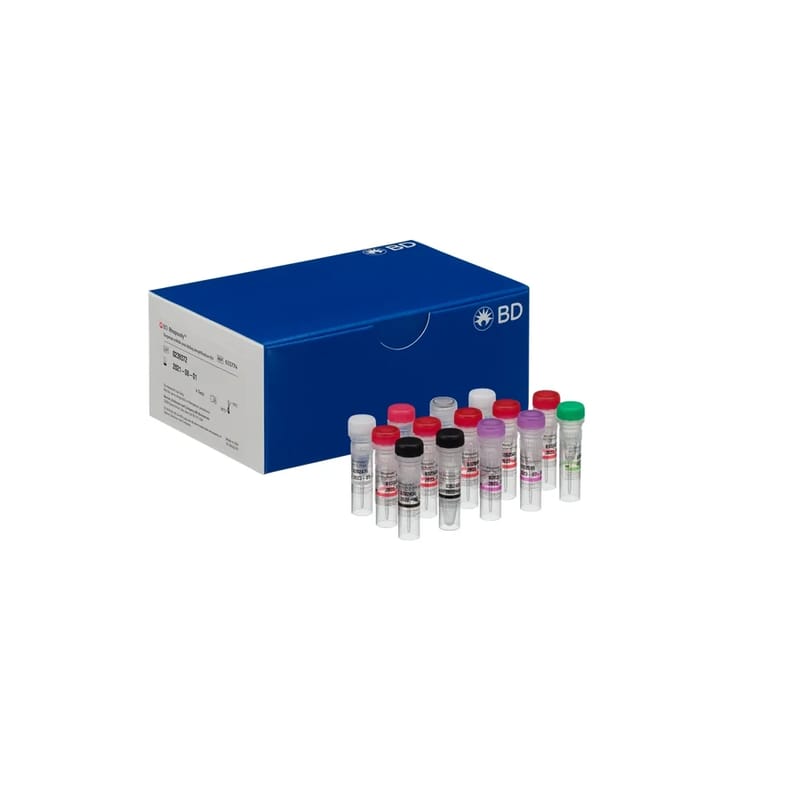
After retrieving and washing the Cell Capture Beads from the Rhapsody Cartridge, a ligation mix, prepared using the reagents provided in the kit, is added to the Beads to ligate the double-stranded DNA fragments to the bead oligos. Following that, a gap-filling mix consisting of the Gap-Filling Enzyme and other reagents provided in the kit is prepared and added to the beads to repair the tagmentase-induced nicks in the transposed fragments ligated to the bead oligos. For detailed instructions on the tagmentation step, splint-bead generation, ligation, gap-filling, and preparation of standalone ATAC-Seq libraries, refer to the protocol Single-Cell ATAC Library Preparation Protocol (Doc ID 23-24473). For instructions on how to use the BD Rhapsody™ Single-Cell Analysis system, refer to the BD Rhapsody™ HT Xpress Single-Cell Analysis System Instrument User Guide (Doc ID 23-24257) or the BD Rhapsody™ HT Xpress System Instrument User Guide for Scanner-free Workflow (Doc ID 23-24256). For sample preparation prior to the library construction, refer to the protocol BD Rhapsody™ System Preparing Single Cell Suspensions Protocol (Doc ID 23-24126) and Rhapsody HT Single-Cell Capture and Analysis System Single-Cell Capture and cDNA Synthesis Protocol (Doc ID 23-24252). For information on the bioinformatic pipeline for the ATAC-Seq assay, refer to BD® Single-Cell Multiomics Bioinformatics Handbook (Doc ID 54169). For safety information, see the BD Rhapsody ™ Single-Cell Analysis System Instrument User Guide (Doc ID 23-24257). Use standard laboratory safety protocols. Read and understand the safety data sheets (SDSs) before handling chemicals. To obtain SDSs, go to regdocs.bd.com or contact BD Biosciences technical support at
[email protected]. Warning: All biological specimens and materials are considered biohazardous so that personal protection should be exercised coming into contact with them. Handle these as if they are capable of transmitting infection and dispose of them with proper precautions in accordance with federal, state, and local regulations. Never pipette by mouth. Wear suitable protective clothing, eyewear, and gloves. Danger: PCR Master Mix contains 5-10 % Tris base, CAS number 77-86-1, EC number 201-064-4 and 1-5 % tetramethylammonium chloride, CAS number 75-57-0, EC number 200-880-8. These reagents are classified as hazardous according to the Globally Harmonized System of Classification and Labelling of Chemicals (GHS). Danger Causes skin irritation. Cause damage to organs (Central Nervous System) via ingestion. Harmful if swallowed. Prevention Wash skin thoroughly after handling Wear protective gloves/protective clothing/eye protection/face protection/hearing protection Do not breathe dust/fume/gas/mist/vapors/spray Do not eat, drink or smoke when using this product Response IF ON SKIN: Wash with plenty of soap and water. Take off contaminated clothing and wash it before reuse. If skin irritation occurs: Get medical advice/attention. Specific treatment (see Safety Data Sheet) IF SWALLOWED: Call a POISON CENTER or doctor/physician if you feel unwell Rinse mouth IF exposed or concerned: Call a POISON CENTER or physician Disposal Store locked up. Dispose of contents/container to an approved facility in accordance with local, regional, national and international regulations.
1. Please refer to www.bdbiosciences.com/us/s/resources for technical protocols.
2. Since applications vary, each investigator should titrate the reagent to obtain optimal results.
3. Please refer to http://regdocs.bd.com to access safety data sheets (SDS).
4. For U.S. patents that may apply, see bd.com/patents.