Description
The 145-2C11 monoclonal antibody specifically binds to the 25-kDa ε chain of the T-cell receptor-associated CD3 complex that is expressed on thymocytes, mature T lymphocytes, and NK-T cells. The cytoplasmic domain of CD3e participates in the signal transduction events that activate several cellular biochemical pathways as a result of antigen recognition. Soluble 145-2C11 antibody can activate either unprimed (naive) or primed (memory/preactivated) T cells in vivo or in vitro, in the presence of Fc receptor-bearing accessory cells. In contrast, plate-bound 145-2C11 can activate T cells in the absence of accessory cells. Soluble 145-2C11 antibody has been reported to induce re-directed lysis of Fc receptor-bearing target cells by CTL clones and can also block lysis of specific target cells by antigen-specific CTL's. Under some conditions, T-cell activation by 145-2C11 antibody has been reported to result in apoptotic cell death. The 145-2C11 antibody does not cross-react with rat leukocytes. Preincubation of thymus cell suspensions at 37°C for 2-4 hours prior to staining reportedly enhances the ability of anti-CD3ε and anti-αβ TCR mAbs to detect the T-cell receptor on immature thymocytes.
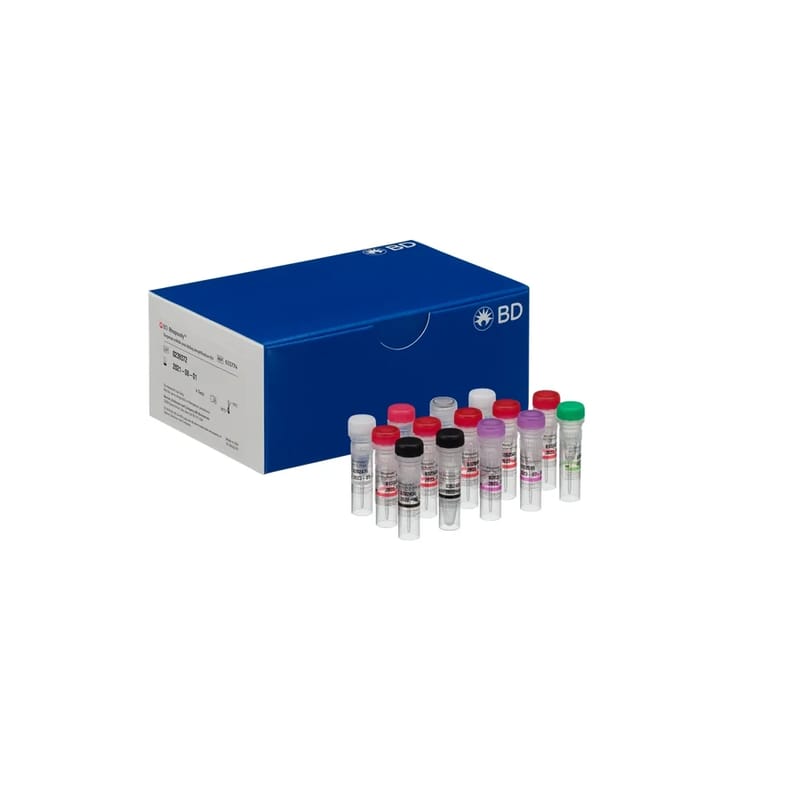
Put all BD® AbSeq Reagents to be pooled into a Latch Rack for 500 µL Tubes (Thermo Fisher Scientific Cat. No. 4900). Arrange the tubes so that they can be easily uncapped and re-capped with an 8-Channel Screw Cap Tube Capper (Thermo Fisher Scientific Cat. No. 4105MAT) and the reagents aliquoted with a multi-channel pipette. BD® AbSeq tubes should be centrifuged for ≥ 30 seconds at 400 × g to ensure removal of any content in the cap/tube threads prior to the first opening.
Store undiluted at 4°C and protected from prolonged exposure to light. Do not freeze. The monoclonal antibody was purified from tissue culture supernatant or ascites by affinity chromatography and conjugated to BD® AbSeq oligonucleotide under optimal conditions.
1. This reagent has been pre-diluted for use at the recommended volume per test. Typical use is 2 µl for 1 × 10^6 cells in a 200-µl staining reaction.
2. The production process underwent stringent testing and validation to assure that it generates a high-quality conjugate with consistent performance and specific binding activity. However, verification testing has not been performed on all conjugate lots.
3. Please refer to bd.com/genomics-resources for technical protocols.
4. Caution: Sodium azide yields highly toxic hydrazoic acid under acidic conditions. Dilute azide compounds in running water before discarding to avoid accumulation of potentially explosive deposits in plumbing.
5. Source of all serum proteins is from USDA inspected abattoirs located in the United States.
6. Illumina is a trademark of Illumina, Inc.
7. Please refer to http://regdocs.bd.com to access safety data sheets (SDS).
8. For U.S. patents that may apply, see bd.com/patents.