Description
The 7G6 antibody recognizes an epitope shared by 145-150-kDa and 190-kDa complement receptor proteins, originally designated CR2 (CD21) and CR1 (CD35), respectively. In the mouse, CD21 and CD35 are expressed on the majority of peripheral B lymphocytes, on the majority of resident peritoneal macrophages and mast cells, on peripheral blood granulocytes after treatment with N-formyl-Met-Leu-Phe, and on follicular dendritic cells, but not on thymocytes, T cells, erythrocytes, or platelets. CD21 is a ligand-binding component of the CD19/CD21/CD81 signal-transduction complex associated with the antigen receptor on B lymphocytes. CD21/CD35 also co-localizes with CD19 on the surface of peritoneal mast cells. Cr2null mice display impaired inflammatory and humoral immune responses in vivo. The 7G6 mAb has been reported to inhibit rosette formation by C3d-bearing sheep erythrocytes, to block the complement dependent trapping of immune complexes by follicular dendritic cells, and to down-regulate mouse CD21/CD35 expression upon in vivo application, thus inhibiting primary antibody responses to immunization. Co-stimulation of B-cell differentiation via Sepharose-coupled 7G6 antibody has also been observed. The 7G6 mAb recognizes an epitope on CD35 distinct from the epitope recognized by anti-mouse CD35, clone 8C12, and it does not block binding of 8C12 mAb to mouse CD35.
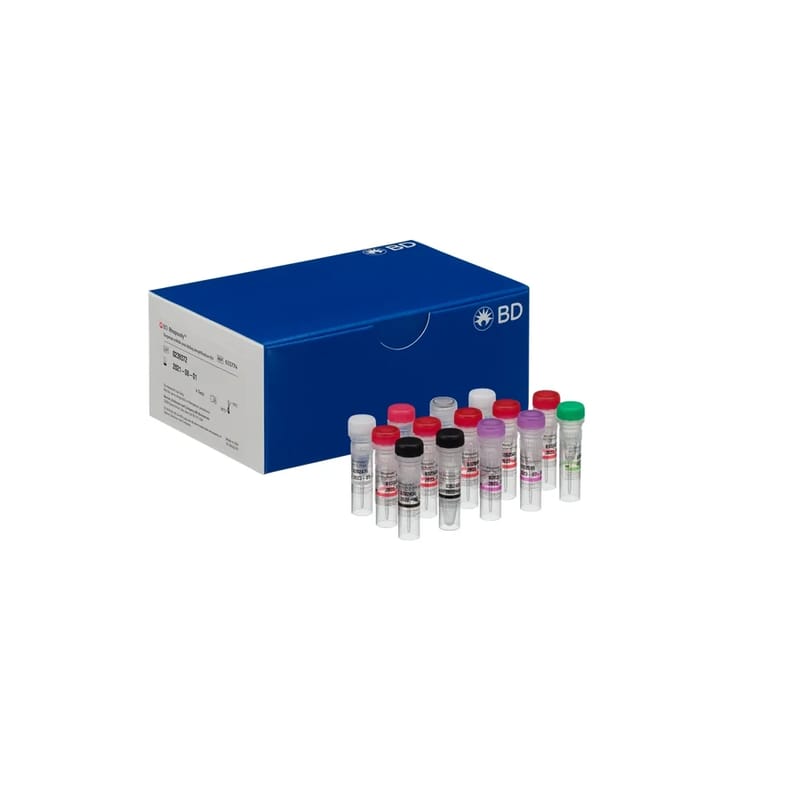
Put all BD® AbSeq Reagents to be pooled into a Latch Rack for 500 µL Tubes (Thermo Fisher Scientific Cat. No. 4900). Arrange the tubes so that they can be easily uncapped and re-capped with an 8-Channel Screw Cap Tube Capper (Thermo Fisher Scientific Cat. No. 4105MAT) and the reagents aliquoted with a multi-channel pipette. BD® AbSeq tubes should be centrifuged for ≥ 30 seconds at 400 × g to ensure removal of any content in the cap/tube threads prior to the first opening.
Store undiluted at 4°C and protected from prolonged exposure to light. Do not freeze. The monoclonal antibody was purified from tissue culture supernatant or ascites by affinity chromatography and conjugated to BD® AbSeq oligonucleotide under optimal conditions.
1. This reagent has been pre-diluted for use at the recommended volume per test. Typical use is 2 µl for 1 × 10^6 cells in a 200-µl staining reaction.
2. The production process underwent stringent testing and validation to assure that it generates a high-quality conjugate with consistent performance and specific binding activity. However, verification testing has not been performed on all conjugate lots.
3. Please refer to bd.com/genomics-resources for technical protocols.
4. Caution: Sodium azide yields highly toxic hydrazoic acid under acidic conditions. Dilute azide compounds in running water before discarding to avoid accumulation of potentially explosive deposits in plumbing.
5. Source of all serum proteins is from USDA inspected abattoirs located in the United States.
6. Illumina is a trademark of Illumina, Inc.
7. Please refer to http://regdocs.bd.com to access safety data sheets (SDS).
8. For U.S. patents that may apply, see bd.com/patents.