Article
How Alzheimer’s Blood Test Advances Could Change Lab Workflows and Sourcing
By Iri ·

Alzheimer’s blood testing is moving beyond the question of whether amyloid pathology is present. A 2026 NIH-supported study identified a 34-circRNA blood model that performed comparably to pTau217 for classifying biomarker-confirmed Alzheimer’s disease and showed stronger results when predicting progression to symptoms in the study cohorts. For your laboratory, this does not mean a new circRNA clinical test is ready to purchase. It means you may need to prepare for more complex workflows involving blood collection, RNA stabilization, extraction, quality control, sequencing, assay validation, and supplier qualification. Understanding those stages now can help you plan sourcing decisions without treating early research as an established diagnostic standard.
What the Latest Alzheimer’s Blood Test Research Means for Your Lab
Before you turn a research headline into a purchasing plan, you need to separate what the study demonstrated from what a future clinical assay might require. That distinction helps you identify relevant laboratory workflows without overstating the readiness of circRNA-based testing.
What Researchers Found in the 34-circRNA Blood Model
Circular RNAs, usually shortened to circRNAs, are RNA molecules whose ends join together to form a closed loop. Their structure makes them more stable than many linear RNA transcripts, while their tissue-specific expression patterns have attracted interest in biomarker research.
In the 2026 study, researchers analyzed blood RNA-sequencing data from 1,221 people with Alzheimer’s disease or no cognitive impairment. They identified 34 circRNAs associated with Alzheimer’s disease status and used them to build a predictive model.
The model was comparable to plasma pTau217 when classifying biomarker-confirmed Alzheimer’s disease. In the discovery cohort, combining circRNA results with pTau217 improved classification performance beyond either model alone.
The researchers also examined whether the biomarkers could predict progression from an asymptomatic stage to symptomatic Alzheimer’s disease. In the analyzed cohorts, the circRNA model performed better than pTau217 alone, and circRNA levels appeared to diverge from normal approximately two to four years before symptom onset. Similar findings were reproduced in two independent cohorts.
These results suggest that circRNAs could eventually complement biomarkers that primarily reflect amyloid and tau pathology. They do not demonstrate that circRNA testing should replace established blood biomarkers.
How circRNA Testing Differs From Existing pTau Blood Tests
Current Alzheimer’s blood testing commonly focuses on proteins associated with amyloid or tau pathology. For example, the FDA cleared the first blood-based in vitro diagnostic device intended to aid Alzheimer’s diagnosis in May 2025. That assay measures the ratio of plasma pTau217 to beta-amyloid 1-42 and is intended for use alongside other clinical information in patients showing signs of cognitive decline. It is not intended as a stand-alone diagnostic or general population screening test.
The new circRNA research addresses a related but different question. Instead of measuring two disease-associated proteins, the model evaluates patterns across 34 RNA transcripts. This may provide information about more recent biological activity and disease progression rather than only indicating whether amyloid-related pathology is present.
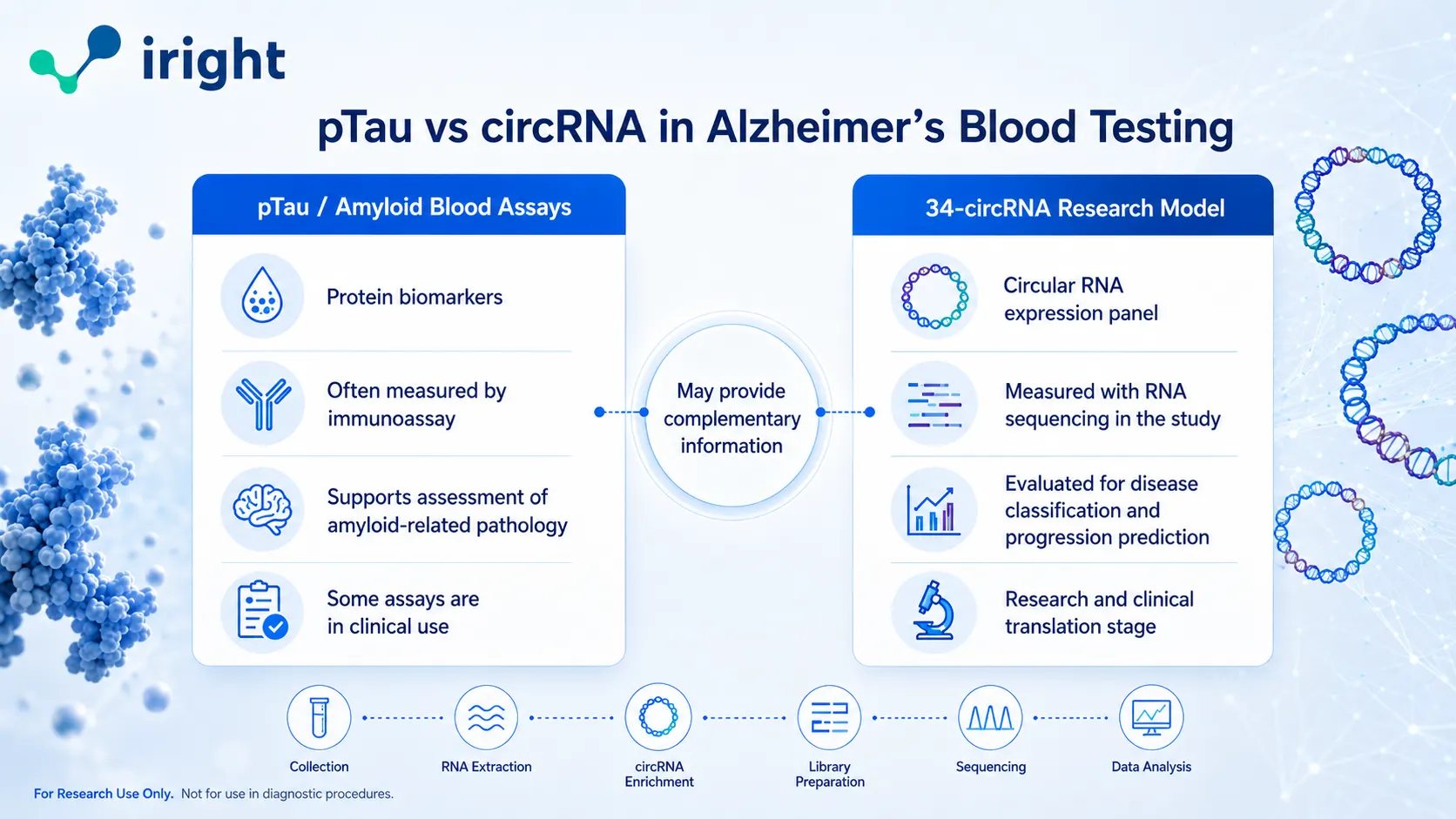
Comparison Area | pTau/Amyloid Blood Assays | 34-circRNA Research Model |
|---|---|---|
Main signal | Disease-associated proteins | Circular RNA expression patterns |
Typical detection method | Immunoassay | RNA sequencing in the published study |
Potential role | Assessing amyloid-related pathology | Classifying disease and estimating progression risk |
Clinical maturity | Some assays have entered regulated clinical use | Research and translational development |
Current limitation | May not fully indicate when symptoms will emerge | Requires larger prospective validation and assay translation |
The strongest future approach may not require laboratories to choose one biomarker over another. In the published study, combining circRNA and pTau217 data produced stronger predictive results than using either model independently.
Why the circRNA Model Is Not Yet a Commercial Clinical Test
The study describes a predictive research model rather than a finished diagnostic product. The researchers used whole-blood RNA sequencing to discover and measure circRNAs, but a commercial clinical assay could eventually use targeted sequencing, qPCR, digital PCR, or another detection method.
Researchers are working with commercial partners to develop translatable clinical assays. However, larger prospective studies are still needed to confirm performance across different populations, clinical settings, sample-handling conditions, and stages of disease.
You should therefore avoid treating the 34-circRNA panel as an assay that can already be added to a routine diagnostic menu. The immediate opportunity lies in research, method development, analytical validation, and the laboratory infrastructure required to move a promising biomarker toward clinical use.
How a Blood Biomarker Moves From Discovery to a Clinical Assay
A biomarker does not move from publication to routine testing in a single step. You need to understand the path from discovery through analytical validation, clinical validation, regulatory review, and laboratory implementation before deciding which products belong on a near-term sourcing list.
Biomarker Discovery and Candidate Selection
During biomarker discovery, you need a workflow capable of detecting a wide range of biological signals without assuming which targets will prove useful.
In the published circRNA study, whole blood was collected in RNA-stabilizing tubes. Researchers purified total RNA, depleted abundant ribosomal and globin RNA, assessed sample quality, prepared sequencing libraries, and generated paired-end RNA-sequencing data. Bioinformatics tools were then used to identify and quantify circular RNA transcripts.
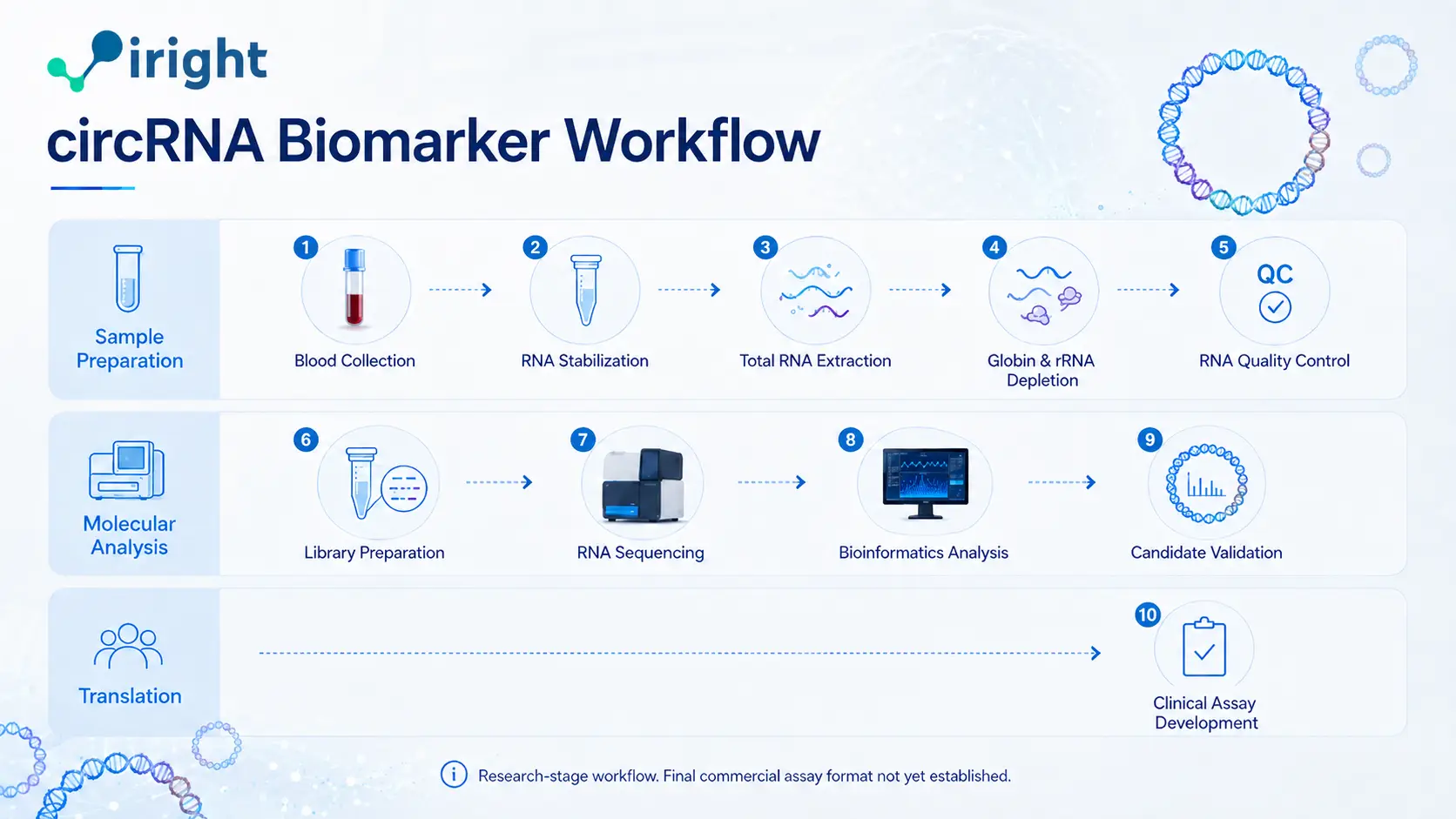
A discovery workflow may therefore include:
Whole-blood RNA collection and stabilization products
Total RNA extraction systems
DNase treatment reagents
Globin and ribosomal RNA depletion kits
RNA quantification and integrity assessment products
RNA-seq library preparation kits
Indexes, adapters, cleanup beads, and amplification reagents
Sequencing reagent kits and flow cells
Data processing and circRNA identification pipelines
At this stage, your objective is not simply to maximize total RNA yield. You also need to preserve the RNA population being studied and minimize technical variation that could be mistaken for a biological difference.
Analytical Validation of the Assay Method
Once candidate biomarkers have been selected, you need to determine whether the proposed assay measures them consistently.
Analytical validation may examine:
Limit of detection and limit of quantification
Precision within and between runs
Linearity and analytical measuring range
Target specificity
Cross-reactivity
Interference from hemolysis, lipemia, or other sample conditions
RNA stability during storage and transport
Effects of freeze-thaw cycles
Lot-to-lot reagent variation
Operator and instrument variability
Reproducibility across laboratory sites
These requirements can change significantly depending on the final detection platform. An RNA-sequencing assay, targeted sequencing panel, qPCR assay, and digital PCR assay will each require different consumables, control materials, instruments, and acceptance criteria.
You should therefore build early sourcing plans around required functions rather than assuming the discovery-stage product list will become the final clinical bill of materials.
Clinical Validation and Intended Use
Analytical accuracy does not automatically demonstrate that a test is clinically useful. You also need evidence that the assay performs appropriately in its intended patient population and answers a defined clinical question.
For a future circRNA assay, possible intended uses could include estimating progression risk, supporting clinical trial enrollment, complementing amyloid and tau testing, or monitoring disease-related changes. These remain potential applications rather than established claims.
Clinical validation would need to clarify:
Who should receive the test
Whether the test is intended for symptomatic or asymptomatic individuals
What a positive, negative, or indeterminate result means
How the result affects clinical decision-making
How performance changes across age, sex, ancestry, and comorbidities
Whether the test adds value beyond pTau assays, imaging, or clinical assessment
How often the test should be repeated
Whether treatment alters the biomarker signal
The published study included sensitivity analyses and independent replication, but the authors still identified larger prospective validation as a necessary next step.
Regulatory Translation and Laboratory Implementation
A clinical assay also requires controlled manufacturing, standardized procedures, documented performance, and quality systems appropriate to its intended market.
Depending on the assay format and regulatory pathway, your implementation plan may need to address:
Defined product claims and intended use
Reagent traceability
Calibrators and control materials
Manufacturing lot consistency
Instrument qualification
Laboratory verification
Standard operating procedures
Technician training
Result interpretation
Quality-control monitoring
Change-control procedures
Regulatory documentation
A reagent used successfully in a research project cannot automatically be treated as interchangeable with a component validated for clinical use. You need to review the product’s intended use, supporting documentation, and role within the validated method before approving it.
Lab Product Categories That Support circRNA Assay Development
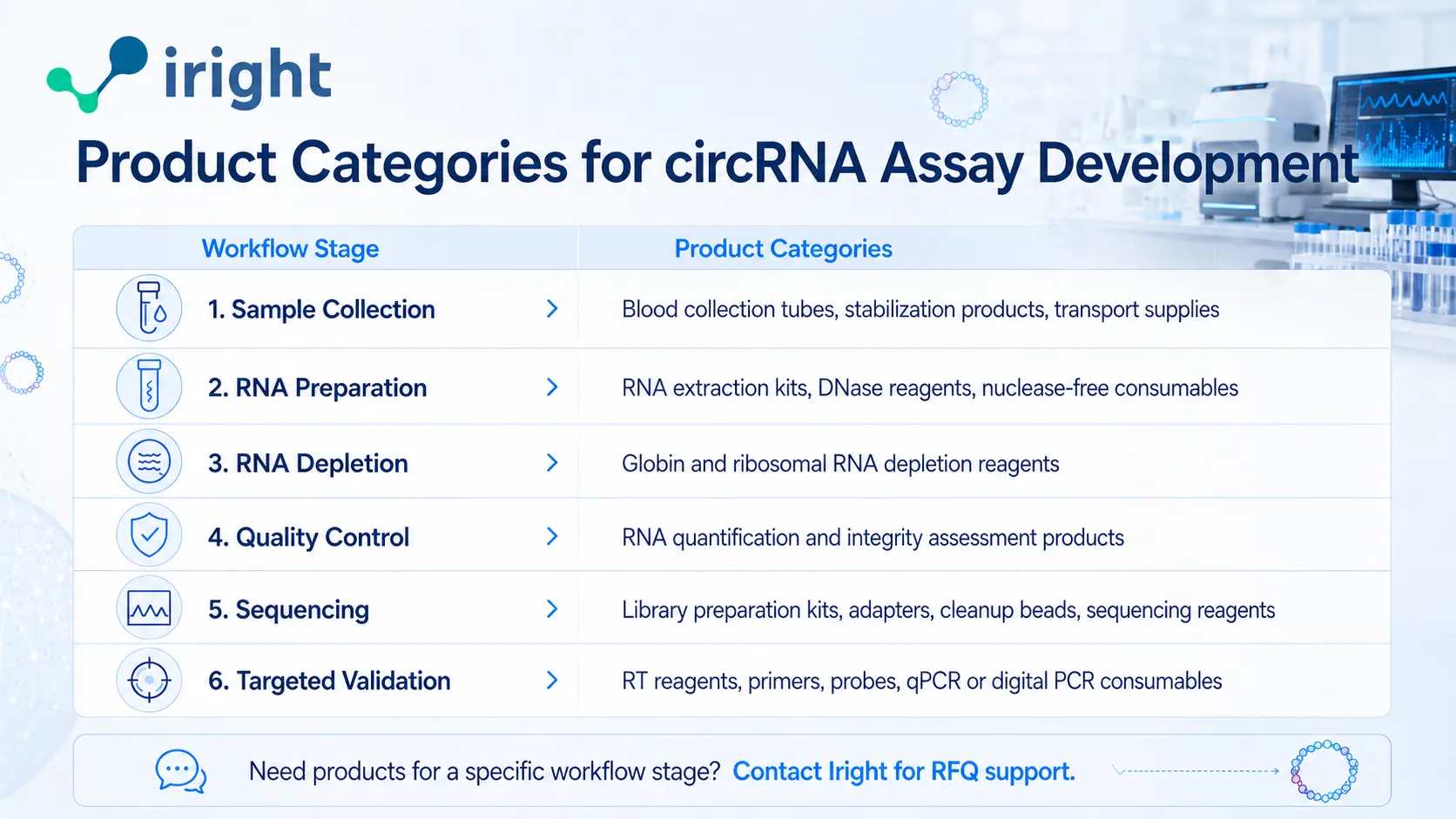
The published study used a research RNA-sequencing workflow rather than a finished diagnostic kit. You should therefore organize potential demand around workflow functions—collection, purification, depletion, quality control, sequencing, and targeted verification—while recognizing that the final clinical platform may look different.
Blood Collection and RNA Stabilization Products
Preanalytical conditions can affect every result produced downstream. If blood is collected into an unsuitable tube, mixed incorrectly, held too long before stabilization, or exposed to uncontrolled temperatures, RNA expression patterns may change before extraction begins.
Relevant product categories include:
Whole-blood RNA collection tubes
RNA stabilization products
Blood collection needles and holders
Tube racks and sample identification products
Secondary transport containers
Temperature-monitoring products
Cold-chain packaging
Sample storage boxes
When you evaluate an alternative collection product, you need to compare more than tube volume and dimensions. Tube chemistry, required fill volume, mixing procedure, stabilization time, storage temperature, extraction compatibility, and validated sample-holding time may all influence performance.
A collection tube should not be replaced solely because another product accepts the same sample volume. You need evidence that the alternative preserves the relevant RNA profile under your actual workflow conditions.
RNA Extraction and Purification Systems
The study used total RNA extracted from stabilized whole blood. In a circRNA workflow, extraction performance needs to be assessed not only by overall yield but also by target recovery, purity, inhibitor carryover, integrity, and reproducibility.
Products in this stage may include:
Manual total RNA extraction kits
Automated RNA purification systems
Instrument-specific reagent cartridges
Magnetic particles and binding reagents
Lysis buffers
DNase treatment reagents
Nuclease-free water
Filtered pipette tips
Low-binding tubes
Deep-well plates and sealing products
Automation can reduce hands-on variation and support higher throughput, but it also creates dependencies on instrument-specific consumables and software-supported protocols. Before changing an extraction product, you should determine whether the change affects RNA concentration, integrity, transcript representation, and downstream assay performance.
Globin and Ribosomal RNA Depletion Reagents
Whole-blood RNA contains highly abundant transcripts that can consume sequencing capacity and reduce the visibility of lower-abundance targets. The published research therefore used both ribosomal RNA and globin RNA depletion before sequencing.
When you compare depletion systems, review:
Supported sample types
Required RNA input
Species compatibility
Depletion efficiency
Recovery of non-target RNA
Compatibility with the library preparation method
Manual or automated workflow requirements
Processing time
Batch capacity
Storage and shipping conditions
Depletion chemistry can affect which transcripts remain available for measurement. A product that removes abundant RNA effectively may still be unsuitable if it changes the recovery of circRNAs included in your model.
RNA Quality Control and Library Preparation
Quality-control decisions determine whether a sample should proceed to sequencing or be rejected before additional reagents are consumed.
Your workflow may require:
Fluorometric RNA quantification reagents
Spectrophotometer cuvettes or microvolume accessories
Electrophoresis chips and assay kits
RNA integrity assessment products
Library quantification kits
Fragment analysis products
Reference RNA materials
Positive and negative controls
After RNA passes quality checks, you may also need directional library preparation kits, adapters, indexes, cleanup beads, amplification reagents, sequencing flow cells, and instrument-specific sequencing kits.
The research study generated 151-nucleotide paired-end sequencing data after ribosomal and globin RNA depletion. That setup was suitable for discovery and model development, but it should not be interpreted as the confirmed configuration of a future commercial assay.
Targeted PCR and Assay Development Reagents
A full RNA-sequencing workflow may be too complex or costly for some routine clinical settings. During translation, assay developers may explore targeted methods that measure only the selected circRNAs.
Potential product categories include:
Reverse-transcription reagents
RNase R and related RNA-processing enzymes
circRNA-specific primers
Hydrolysis probes
qPCR master mixes
Digital PCR reagents
qPCR plates and optical seals
Digital PCR cartridges or partitions
Synthetic RNA standards
Positive and negative control materials
Researchers in the study also used qPCR to examine the relative expression of circRNAs with validated primers. This supported additional biological analysis but did not establish a finished qPCR-based diagnostic kit.
If a future assay moves to targeted detection, your procurement list may become shorter. However, requirements for primer specificity, control materials, calibration, contamination management, and lot consistency will become more important.
How to Evaluate Products for a New Biomarker Workflow
When you source products for a developing biomarker assay, matching a broad product category is not enough. You need to evaluate how each component affects target recovery, analytical variability, instrument compatibility, documentation, and the amount of revalidation required after a change.
Start With the Method Instead of the Brand
Before requesting quotations, document the method requirements that products must satisfy.
Your sourcing specification should include:
Sample type and minimum sample volume
Collection and stabilization method
Maximum time before processing
Storage and transport conditions
RNA extraction method
Required RNA yield and quality
Depletion requirements
Target circRNAs
Detection platform
Instrument model
Throughput
Quality-control limits
Intended research or clinical use
This approach prevents your purchasing decision from being driven by a familiar brand name rather than technical suitability.
It also gives alternative suppliers enough information to propose a genuinely comparable product. A catalogue number alone may not reveal which specifications are essential to your method and which can be adjusted.
Evaluate Compatibility at Every Workflow Interface
A product can perform well independently and still fail when connected to the rest of your workflow.
You should examine interfaces such as:
Collection tube to extraction chemistry
Extracted RNA to depletion reagent
Depleted RNA to library preparation kit
Library type to sequencing platform
Target sequence to primer or probe design
Control material to assay measuring range
Data output to analysis pipeline
For example, two extraction kits may produce similar RNA concentrations while recovering different transcript populations. A change that appears acceptable during a basic yield comparison could alter the circRNA model’s output.
Your comparison should therefore include downstream performance, not just the specification printed on the product datasheet.
Separate Research-Use Products From Clinical Products
Research-use-only products can support discovery, method development, and laboratory research. They do not automatically carry the manufacturing controls, validated claims, or regulatory documentation required for clinical diagnostic use.
Research Workflow | Clinical Diagnostic Workflow |
Can support exploratory method development | Must follow a defined intended use |
May allow protocol adjustment | Requires controlled and documented procedures |
Often uses research-use-only reagents | May require regulated or validated components |
Performance is established by your research team | Performance must meet defined clinical requirements |
Alternatives may be tested experimentally | Changes may trigger formal verification or revalidation |
You should verify the intended use of every product and avoid assuming that a reagent is appropriate for clinical testing because it performs well in a research publication.
Compare the Total Cost of Validation
A lower unit price does not always reduce the total cost of the workflow.
When you change a method-critical product, your true cost may include:
Additional comparison samples
Technician time
Instrument runs
Repeat extractions or failed libraries
Control materials
Data analysis
Method documentation
Quality review
Shipping qualification
Study delays
If an alternative requires extensive revalidation, a modest saving on each kit may not justify the operational burden. In contrast, prequalifying a technically suitable alternative before a shortage occurs can protect both your budget and project timeline.
Questions to Ask Before Approving Alternative Lab Products
Alternative products can protect your timeline, but an undocumented substitution can also introduce a new analytical variable. Before you approve a replacement, you should obtain enough technical and supply information to judge both immediate compatibility and the longer-term cost of maintaining the method.
Question | Why You Should Ask It |
Is the product validated for your exact sample type? | Whole blood, plasma, serum, and isolated cells are not interchangeable matrices. |
Is the product intended for research or diagnostic use? | Intended-use status affects how you can implement and document the product. |
Is it compatible with your instrument model? | Instrument-specific cartridges, plates, and software protocols may limit substitution. |
What RNA input range does it support? | Input requirements can affect low-volume or low-yield samples. |
What target recovery data are available? | Total RNA yield alone may not demonstrate suitable circRNA recovery. |
How is lot-to-lot consistency controlled? | Variation between lots can shift biomarker measurements. |
Can one lot be reserved for the study? | Using the same lot may reduce additional validation variables. |
What are the confirmed storage and shipping conditions? | Temperature excursions can damage RNA-related reagents and enzymes. |
What is the current lead time? | A general estimate may differ from confirmed availability for your order quantity. |
Will formulation changes be communicated? | Undocumented changes can affect a previously verified method. |
Are technical comparison documents available? | Side-by-side data can help you design a focused verification study. |
Is a second compatible option available? | A backup product may reduce future supply disruption. |
When you request an alternative, avoid asking only for “the same type of product.” Provide the original product’s function, essential specifications, sample type, platform, and performance requirements.
You should also require the supplier to identify meaningful differences rather than simply describing the alternative as equivalent. Final approval should remain with your technical or quality team after reviewing the documentation and completing any required testing.
How to Reduce Lead-Time Risk Without Compromising Validation
A low-cost consumable can delay an entire study when it becomes unavailable. You can reduce that risk by identifying method-critical components early, validating suitable alternatives before shortages occur, and separating products that require full comparison studies from those that need only limited verification.
Classify Products by Validation Risk
You can begin by dividing your product list into three practical risk groups.
High-risk products directly affect sample integrity, target recovery, measurement, or calibration. These may include collection tubes, stabilization reagents, extraction systems, depletion kits, primers, probes, master mixes, reference materials, and instrument-specific cartridges.
Medium-risk products affect workflow consistency but may be easier to compare. Examples can include library cleanup beads, quantification reagents, PCR plates, seals, and some sample-transfer consumables.
Lower-risk products usually have a limited direct effect on analytical performance. These may include general racks, secondary containers, labels, and non-method-specific storage accessories.
The classification is not universal. You should assign risk according to your validated method, instrument, sample type, and quality system.
Qualify Alternatives Before a Shortage Happens
Waiting until a product is unavailable leaves you with less time to review documentation, obtain samples, and complete comparison testing.
A proactive qualification process can follow these steps:
Identify the product’s method-critical specifications.
Find technically plausible alternatives.
Review intended use and compatibility documentation.
Test the alternatives alongside the current product.
Define acceptance criteria before reviewing the results.
Record the approved product and permitted conditions of use.
Monitor formulation, manufacturing, and availability changes.
You do not need to qualify an alternative for every low-risk laboratory item. Focus first on products with long lead times, limited manufacturers, instrument dependencies, temperature-controlled shipping, or a direct effect on assay performance.
Make Your RFQ Technically Useful
A clear RFQ helps suppliers compare options accurately and reduces repeated clarification.
Include:
Manufacturer and catalogue number, when available
Product function
Required quantity
Pack size
Sample type
Instrument model
Required technical specifications
Storage conditions
Shipping destination
Required delivery date
Lot consistency requirements
Whether alternatives are permitted
Documentation required for an alternative
When alternatives are allowed, state which specifications are fixed and which can be adjusted. This gives you more sourcing flexibility without encouraging unsuitable substitutions.
For a multi-step RNA workflow, you may also benefit from consolidating related products into one RFQ. You can compare availability across collection, extraction, quality control, library preparation, and detection while still reviewing each product individually for technical compatibility.
What to Watch as circRNA Assays Move Toward Clinical Use
Commercial demand will depend on more than another positive publication. You should watch whether the circRNA model succeeds in prospective cohorts, moves to a practical targeted platform, demonstrates clinical utility, and reaches clearly defined regulatory and laboratory implementation milestones.
Prospective Validation in Larger Cohorts
The published results were replicated in independent datasets, which strengthens the evidence. However, the researchers still noted that larger prospective validation is required.
Future studies will need to show whether the model:
Predicts progression consistently in real clinical settings
Performs across broader demographic groups
Remains stable under different collection conditions
Produces comparable results across laboratories
Is affected by medications or other diseases
Adds useful information beyond established biomarkers
Supports decisions that improve patient management or clinical trial design
Results from prospective studies will help determine whether the 34-target model remains intact or whether a smaller set of circRNAs can deliver sufficient performance.
Movement From RNA Sequencing to Targeted Detection
The final platform will strongly influence future purchasing demand.
You should monitor whether assay developers:
Continue using full RNA sequencing
Develop a targeted sequencing panel
Transfer the model to qPCR or digital PCR
Reduce the number of circRNA targets
Introduce standardized calibrators or controls
Design the test for existing laboratory instruments
Automate extraction and data analysis
Define acceptable sample transport conditions
A targeted assay could reduce sequencing costs and simplify implementation, but it would also require reliable primer or probe design, standardized controls, and platform-specific validation.
Until the platform is announced, it is more accurate to discuss potential workflow categories than to predict demand for a specific kit or instrument.
Evidence of Clinical Utility
A test may be analytically accurate without changing clinical decisions. To achieve broader adoption, developers will need to demonstrate how the result should be used.
Potential applications may include selecting participants for clinical trials, estimating the risk of near-term symptom progression, complementing amyloid testing, or monitoring changes during treatment. NIH specifically highlighted possible value in trial selection and treatment-response monitoring, but these applications remain under development.
You should look for published evidence showing:
A clearly defined clinical use
Improved decisions compared with existing methods
Reproducible interpretation thresholds
Appropriate handling of indeterminate results
Benefits that justify the cost and complexity of testing
Performance within the intended patient population
Commercial and Regulatory Milestones
A collaboration with commercial partners indicates movement toward translation, but it does not confirm a launch date or final assay format.
Useful milestones to monitor include:
Publication of prospective validation results
Announcement of a targeted assay platform
Analytical validation data
Availability of reference materials
Regulatory submissions or clearances
Adoption by reference laboratories
Inclusion in professional guidelines
Defined reimbursement or access pathways
Commercial reagent and instrument partnerships
These developments will provide stronger evidence of procurement demand than research attention alone.
Conclusion
The latest circRNA findings show how Alzheimer’s blood testing could expand beyond measuring a small number of disease-associated proteins. Your immediate priority is not to purchase products for an assay that has not yet been finalized, but to understand the workflows required for discovery, validation, and future implementation. Blood collection, RNA stabilization, extraction, depletion, quality control, sequencing, and targeted detection can all affect assay performance. By documenting your method, qualifying critical suppliers, and evaluating alternatives before shortages occur, you can prepare for emerging biomarker programs without compromising scientific validity. Iright can help you compare cross-brand options, consolidate RFQs, and identify alternatives based on your confirmed technical and lead-time requirements.