Article
Why Labs Should Evaluate Platform Compatibility Before Choosing a Molecular Diagnostic Assay
By Iri ·

Key Takeaways
Molecular diagnostic procurement is shifting from selecting individual assays to evaluating complete laboratory workflows.
Platform compatibility, automation, throughput, and turnaround time are becoming critical purchasing considerations.
Supporting reagents, consumables, and supply reliability should be evaluated alongside assay performance.
A workflow-based sourcing approach helps laboratories reduce implementation risks and build more sustainable testing operations.
Molecular diagnostic laboratories are facing increasingly complex purchasing decisions as testing workflows become more automated and integrated. Instead of focusing only on assay specifications, laboratories now need to consider how products fit into existing platforms, reduce manual processes, and support consistent operations. Recent developments in automated diagnostic systems demonstrate a broader industry shift: successful implementation depends not only on choosing the right test, but also on selecting a workflow that matches laboratory requirements, infrastructure, and long-term operational goals.
Why Molecular Diagnostic Procurement Is Moving From Individual Assays to Complete Workflows
As molecular diagnostics continue to evolve, laboratories are placing more attention on workflow efficiency rather than evaluating assays as standalone products. The purchasing decision now involves understanding how each component works together, from instruments and reagents to sample preparation and daily laboratory operations.
Traditionally, laboratories selected molecular diagnostic assays primarily based on analytical performance, detection targets, and technical specifications. While these factors remain important, they are only part of the overall evaluation process.
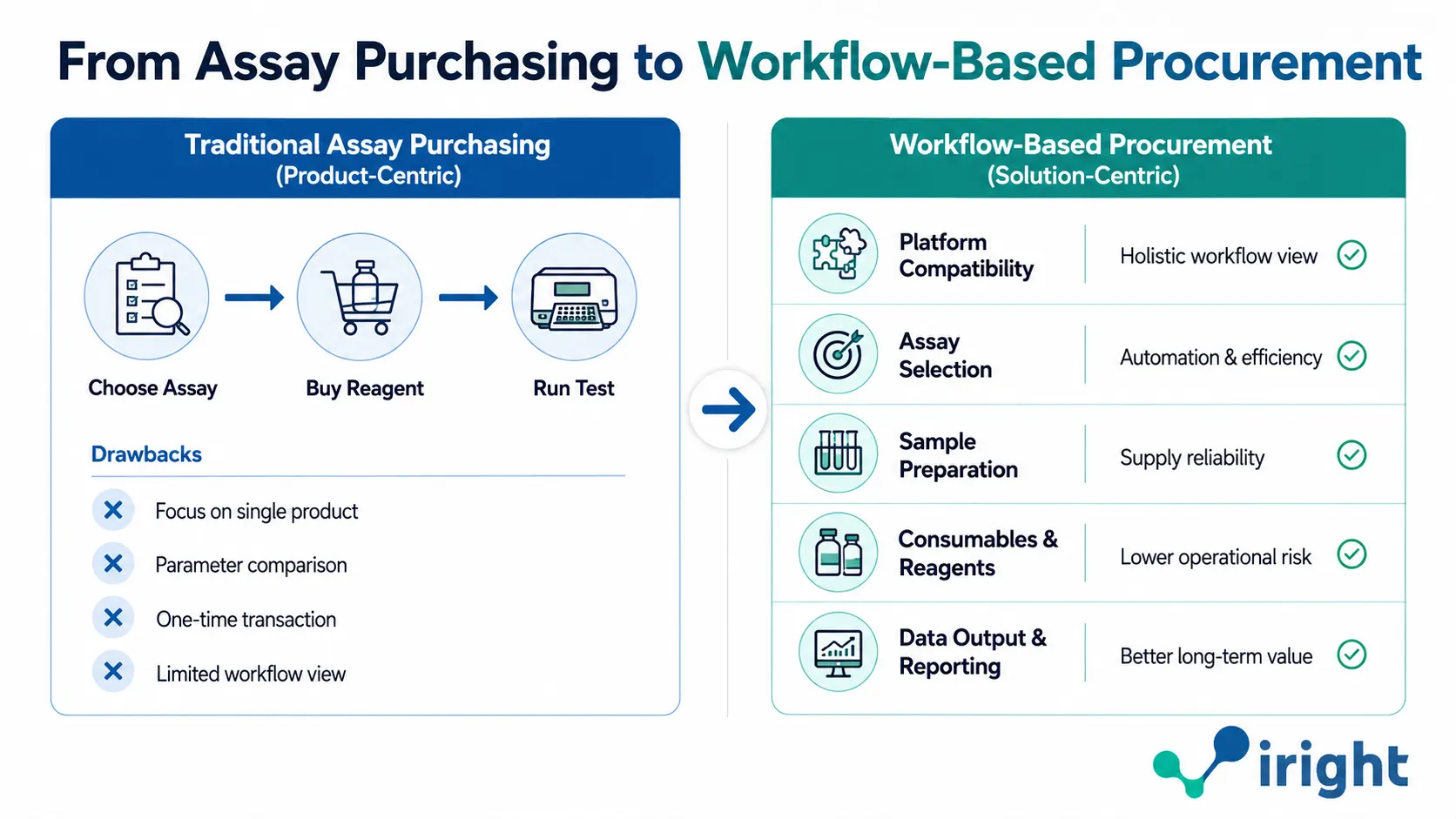
Modern diagnostic workflows increasingly require laboratories to consider:
Compatibility with existing instruments and platforms
Automation capabilities
Operator workload
Processing capacity
Turnaround time (TAT)
Long-term supply stability
A recent example is Roche’s cobas HDV test, which was designed for cobas 5800, 6800, and 8800 systems. Roche highlighted the solution as a high-throughput and fully automated HDV assay, addressing challenges associated with manual testing methods and laboratory-developed tests.
The significance of this development goes beyond the launch of a new assay. It reflects a larger trend in laboratory procurement: buyers are increasingly evaluating whether a product can integrate smoothly into an existing diagnostic ecosystem.
For laboratories, the key question is no longer simply:
“Which assay provides the required result?”
Instead, it is becoming:
“Which assay can support our complete workflow with the least operational complexity?”
5 Factors Labs Should Evaluate Before Purchasing a Molecular Diagnostic Assay
Selecting a molecular diagnostic assay requires a broader assessment than comparing product specifications. By evaluating workflow requirements before purchasing, your team can better understand implementation challenges and identify solutions that fit existing laboratory operations.
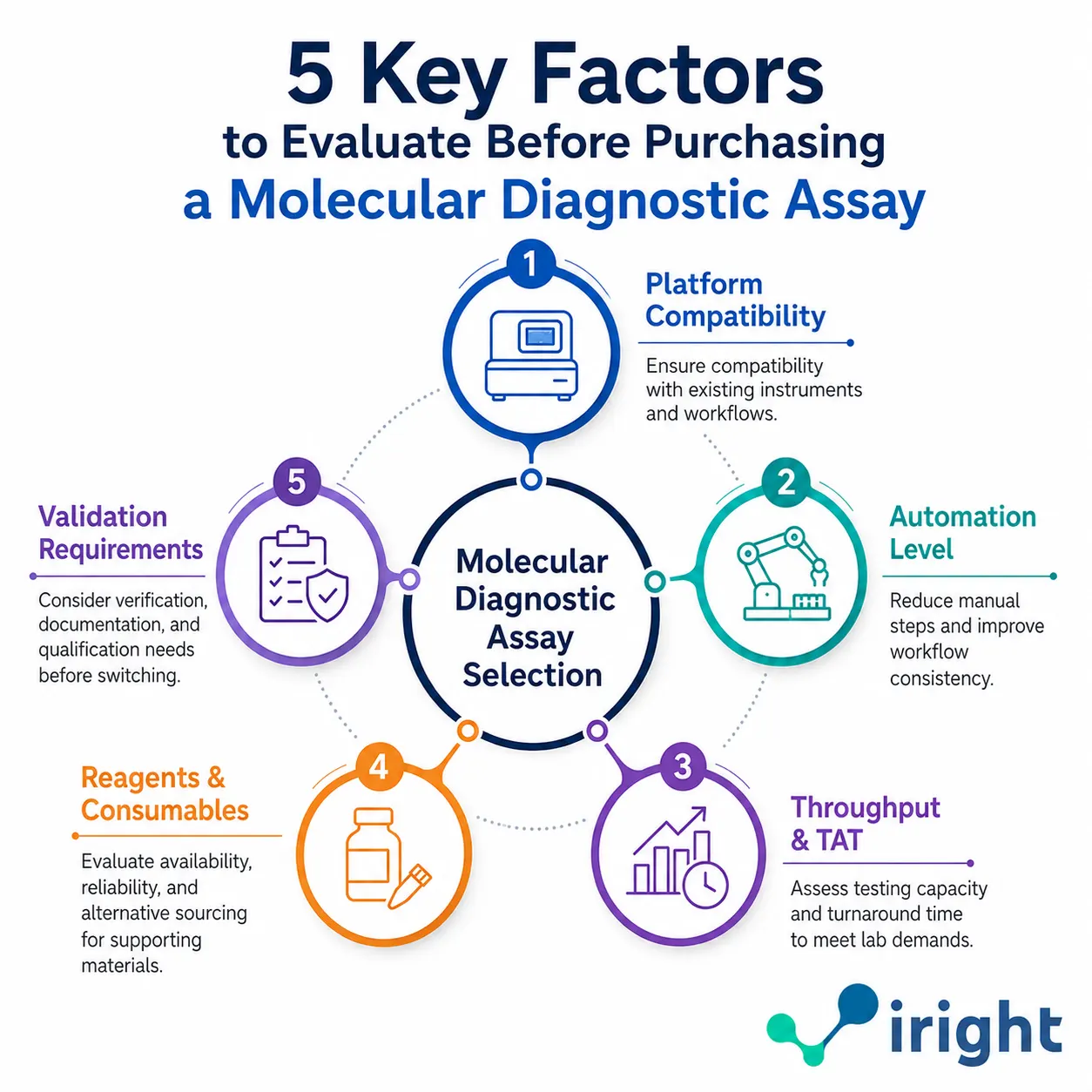
1. Platform Compatibility and Existing Laboratory Infrastructure
The first consideration is whether the assay aligns with your current laboratory setup.
Before introducing a new molecular diagnostic product, evaluate:
Does the assay work with existing instruments?
Will additional equipment investment be required?
Can current workflows support implementation?
Will laboratory staff need additional training?
Platform compatibility affects not only technical deployment but also operational efficiency. An assay that requires significant workflow changes may create additional validation requirements, staff training needs, and maintenance considerations.
For laboratories with established testing platforms, choosing products that fit existing infrastructure can simplify adoption and reduce unnecessary operational disruption.
2. Automation Level and Reduction of Manual Workflows
Automation has become a major factor influencing molecular diagnostic purchasing decisions. Reducing manual intervention can improve workflow consistency, optimize laboratory resources, and help teams manage increasing testing demands.
Roche’s Elecsys IGRA TB test provides another example of this trend. The test is designed to run on cobas immunoassay systems, with Roche emphasizing reduced reliance on manual workflows, faster processing, and standardized testing procedures.
When evaluating automated diagnostic solutions, laboratories should consider:
How many manual steps can be removed?
Does automation improve process consistency?
Can the workflow be managed efficiently with existing staff?
Does the solution support future testing volume growth?
Automation should not be viewed only as a technology upgrade. It is a workflow decision that affects daily laboratory operations.
3. Throughput and Turnaround Time (TAT)
For laboratories handling increasing sample volumes, throughput and turnaround time are essential purchasing considerations.
A diagnostic workflow with appropriate throughput can help laboratories:
Process more samples efficiently
Improve scheduling flexibility
Reduce delays between testing and reporting
Better allocate laboratory resources
However, turnaround time should not be evaluated separately from overall workflow performance.
The fastest assay is not always the most suitable choice. A practical solution needs to balance:
Testing speed
Platform compatibility
Workflow complexity
Supply availability
Operational requirements
A laboratory may achieve better long-term efficiency by selecting a solution that integrates smoothly into existing processes rather than choosing a product based only on speed.
4. Supporting Reagents, Consumables, and Supply Reliability
Molecular diagnostic workflows depend on more than the primary assay. Supporting materials, including PCR reagents, sample preparation products, and laboratory consumables, play an important role in maintaining consistent operations.
When preparing procurement plans, consider:
Availability of supporting reagents
Lead times and supply continuity
Compatibility requirements
Alternative sourcing options
This is particularly important for laboratories operating at scale, where delays in supporting materials can affect the entire testing workflow.
Iright helps laboratories evaluate molecular diagnostic sourcing requirements by comparing compatible products, supporting reagents, and alternative supplier options. By looking beyond individual product selection, Iright supports a more complete workflow-based procurement approach.
5. Validation Requirements Before Switching Brands or Platforms
Changing assays, reagents, or consumable suppliers is not simply a purchasing decision. Laboratories often need to consider validation processes, documentation updates, workflow adjustments, and staff adaptation.
Before switching products, evaluate:
Qualification requirements
Documentation availability
Performance verification needs
Impact on existing procedures
A product that appears suitable from a specification perspective may still require additional evaluation before integration into a regulated or quality-controlled environment.
Understanding these requirements early helps procurement teams avoid unexpected costs and delays.
How to Build a Better RFQ Strategy for Molecular Diagnostic Supplies
A well-prepared RFQ can help laboratories communicate technical requirements more effectively and receive more relevant sourcing options. Instead of listing only product names or specifications, procurement teams should include workflow requirements and operational expectations.
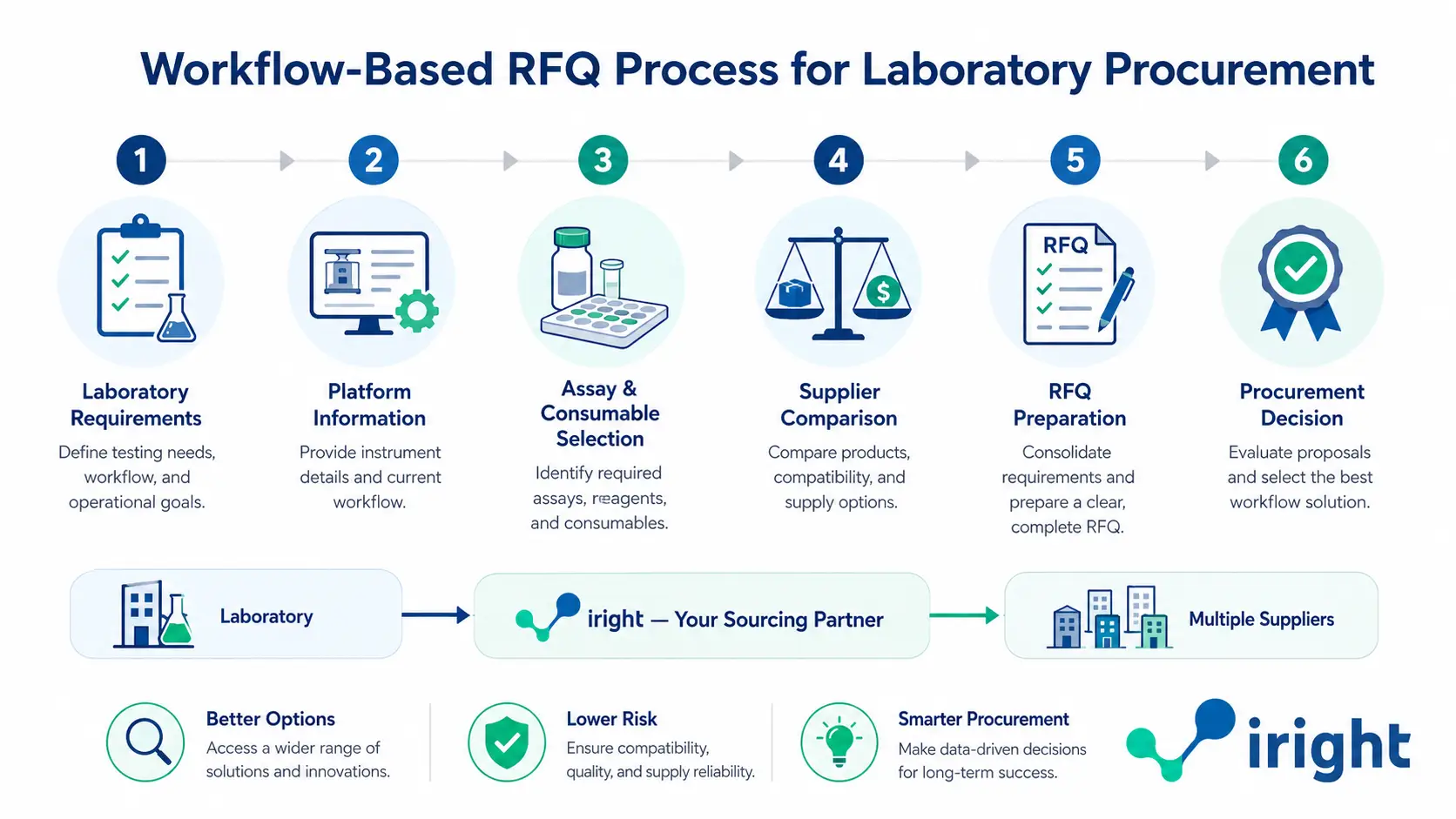
A comprehensive molecular diagnostic RFQ should include the following information:
Existing Platform Information
Provide details such as:
Current instruments and platforms
Existing workflow structure
Sample types being processed
This information allows suppliers to recommend products that better match laboratory requirements.
Required Assay Characteristics
Define key technical requirements, including:
Detection targets
Required testing capacity
Regulatory considerations
Performance expectations
Operational Requirements
Consider including:
Desired turnaround time
Automation requirements
Consumable compatibility
Workflow limitations
Supply and Sourcing Requirements
Procurement teams should also evaluate:
Lead time expectations
Alternative product options
Multi-brand comparisons
Long-term availability
Iright supports laboratories in organizing workflow-based sourcing requirements, helping teams compare diagnostic products, identify compatible options, and prepare more practical RFQ packages before supplier discussions.
When Alternative Sourcing Makes Sense for Molecular Diagnostic Workflows
While many laboratories rely on established suppliers, alternative sourcing can provide additional flexibility when procurement challenges arise.
Alternative sourcing may become relevant when laboratories encounter:
Long product lead times
Supply availability issues
Need for workflow expansion
Requirements for cross-brand comparison
However, alternative sourcing should not focus only on finding another supplier. Laboratories need to evaluate whether the alternative option meets workflow requirements, documentation expectations, and quality standards.
Important evaluation factors include:
Technical suitability
Qualification requirements
Supply reliability
Integration with existing processes
A structured comparison approach helps laboratories identify practical alternatives while maintaining workflow stability.
Building Future-Ready Molecular Diagnostic Procurement Strategies
As diagnostic laboratories become more automated and interconnected, procurement strategies must evolve beyond individual product selection. The most effective purchasing decisions consider how assays, platforms, consumables, and supply chains work together.
A workflow-based approach allows laboratories to evaluate:
Platform compatibility
Automation opportunities
Operational efficiency
Supply reliability
Future scalability
The shift toward integrated diagnostic workflows means procurement teams need a broader perspective when selecting molecular diagnostic products.
By supporting product comparison, alternative sourcing evaluation, and workflow-level procurement planning, Iright helps laboratories approach molecular diagnostic purchasing with a more practical and structured strategy.
Conclusion
Molecular diagnostic procurement is becoming increasingly focused on workflow performance rather than individual assay selection. Platform compatibility, automation, throughput, and supply reliability all influence whether a diagnostic solution can succeed in real laboratory environments. By evaluating these factors before issuing an RFQ, your team can reduce implementation challenges and make more informed purchasing decisions. Whether you are expanding testing capacity, replacing existing products, or comparing alternative sourcing options, a workflow-based approach can help build a more reliable and sustainable molecular diagnostic operation.