Article
How to Source Supplies for a Reliable Multiomics Workflow
By Iri ·

Multiomics research allows you to examine genomic, transcriptomic, proteomic, and other biological information within a connected study. However, combining these methods also makes laboratory procurement more complicated. A collection tube, extraction reagent, storage condition, or quality-control product selected at the beginning may affect several downstream analyses. Instead of purchasing isolated reagents, you need to plan sample preparation, platform-specific supplies, shared consumables, documentation, and delivery requirements as one coordinated workflow. This guide explains how you can build a practical multiomics sourcing strategy while reducing compatibility, availability, and supply continuity risks.
Why Multiomics Research Requires Workflow-Level Sourcing
A multiomics project connects several analytical methods to the same biological question. This makes your purchasing decisions interdependent: a product selected for sample collection, stabilization, extraction, or storage can influence multiple datasets instead of affecting only one individual assay.
The growing scale of multiomics research illustrates why laboratories need a broader sourcing strategy. In June 2026, the NIH All of Us Research Program announced an expanded integrated dataset covering more than 747,000 participants, including more than 535,000 whole-genome sequences and nearly 482,000 electronic health records. The release also introduced proteomics data from nearly 10,000 participants, RNA-seq data from nearly 9,000 participants, and long-read whole-genome sequences from more than 14,500 participants.
This development does not mean that every laboratory must immediately adopt a multiomics platform. It does, however, demonstrate how genomic, transcriptomic, proteomic, clinical, and other data types are increasingly being studied together.
In a single-assay project, you may only need to complete one defined task, such as:
Extracting RNA from cultured cells
Preparing DNA libraries for sequencing
Measuring protein concentration
Running samples through an LC-MS workflow
In a multiomics project, the same biological sample may need to support several of these tasks. You may want to analyze gene variants, RNA expression, protein abundance, structural variation, or other molecular characteristics across the same sample set.
As a result, you cannot evaluate each product only by its individual performance. You also need to consider how it affects the products and procedures used before and after it.
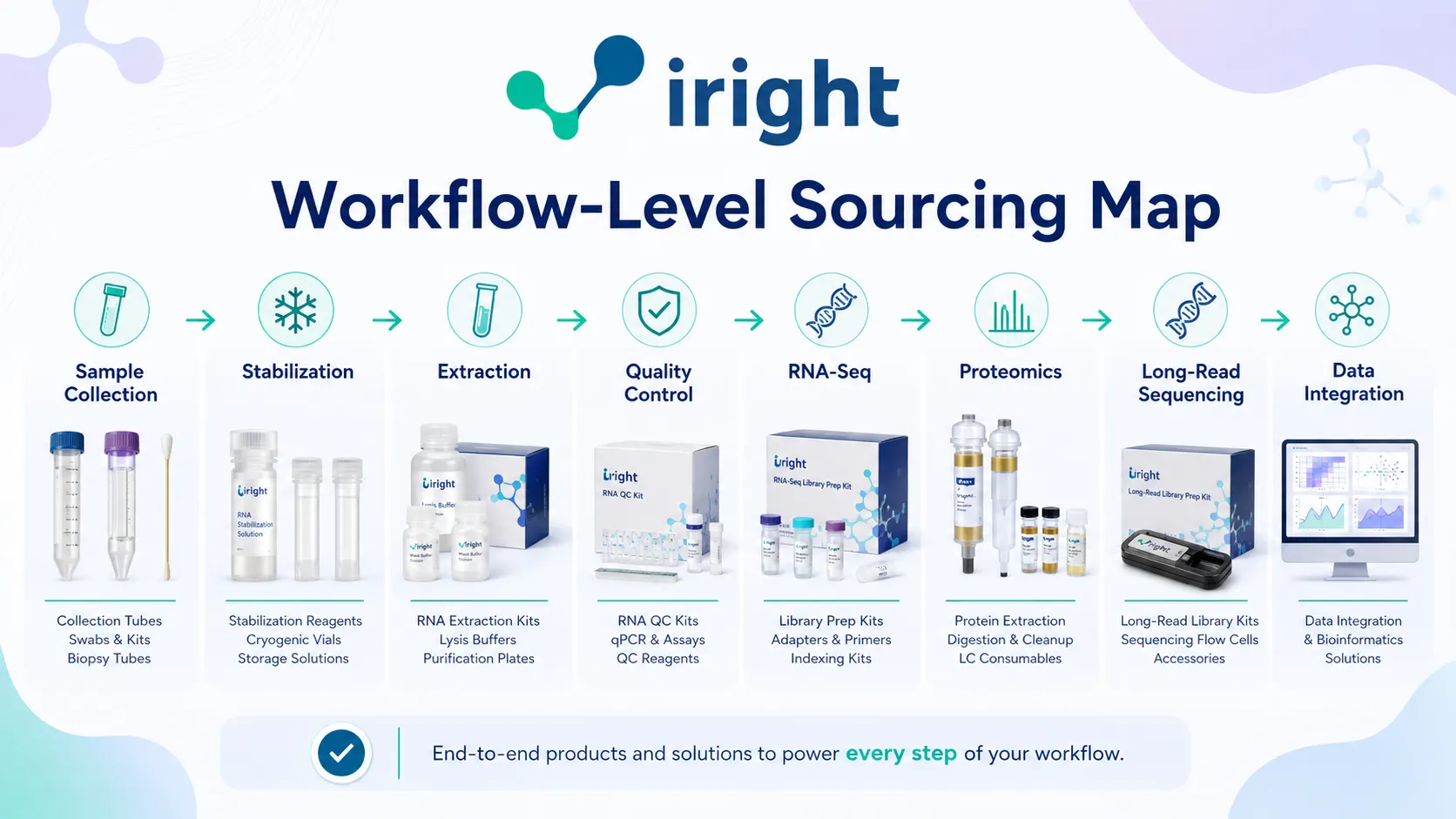
For example, a stabilization method that preserves DNA may not provide the RNA quality required for transcriptomic analysis. A protein extraction buffer may produce a strong yield but contain detergents or salts that interfere with downstream digestion or mass spectrometry. Repeated freeze-thaw cycles may reduce the quality of several analytes at once.
Your sourcing strategy therefore needs to start with the complete workflow rather than an isolated catalog number.
Map the Complete Multiomics Workflow Before Requesting Quotes
Before you compare brands, pack sizes, or prices, you should map every stage connecting sample collection to usable data. This helps you identify shared materials, method-specific products, compatibility requirements, and supplies whose absence could delay several parts of your study.
Define Your Samples and Study Design
Start by documenting what your samples are and how they will be used.
Your sourcing list may change significantly depending on whether you are working with:
Whole blood
Plasma or serum
Fresh or frozen tissue
Fixed tissue
Cultured cells
Microbial samples
Purified nucleic acids
Previously stored biospecimens
You should also confirm:
How many samples you expect to process
Whether each sample will support one or several analyses
Whether samples need to be divided into aliquots
How long samples will be stored
Whether samples will be transferred between facilities
Whether preparation will be manual, automated, or partially automated
How many batches or experimental runs you expect
These details affect the number and type of tubes, plates, tips, storage products, extraction kits, filters, reagents, and quality-control materials you will need.
They also help you avoid purchasing products that work technically but do not suit your actual throughput. A kit designed for small manual batches may become inefficient when you need to process hundreds of samples, while a high-throughput format may produce unnecessary waste in a small pilot study.
When your requirements cover several product categories or manufacturers, you can send Iright a consolidated list containing your sample type, estimated quantity, preferred methods, and required delivery schedule. Iright can help organize the request by workflow stage and compare relevant product formats, pack sizes, availability, and potential alternatives.
Submit your workflow requirements to request a consolidated product quote.
Separate Shared Supplies from Method-Specific Products
Once you have mapped your samples, divide your purchasing list into two groups.
Shared workflow supplies may include:
Sample collection containers
Storage tubes and cryogenic vials
Low-binding microcentrifuge tubes
Pipette tips
Centrifugation products
Filtration products
Nuclease-free water
General laboratory buffers
Labels and sample-tracking materials
Sealing films
Personal protective equipment
Method-specific supplies may include:
DNA or RNA extraction kits
Nucleic acid cleanup products
Protein extraction and digestion reagents
Sequencing library preparation kits
Indexing or barcoding reagents
Assay plates
Chromatography columns
Instrument cartridges
Calibration products
Reference materials and controls
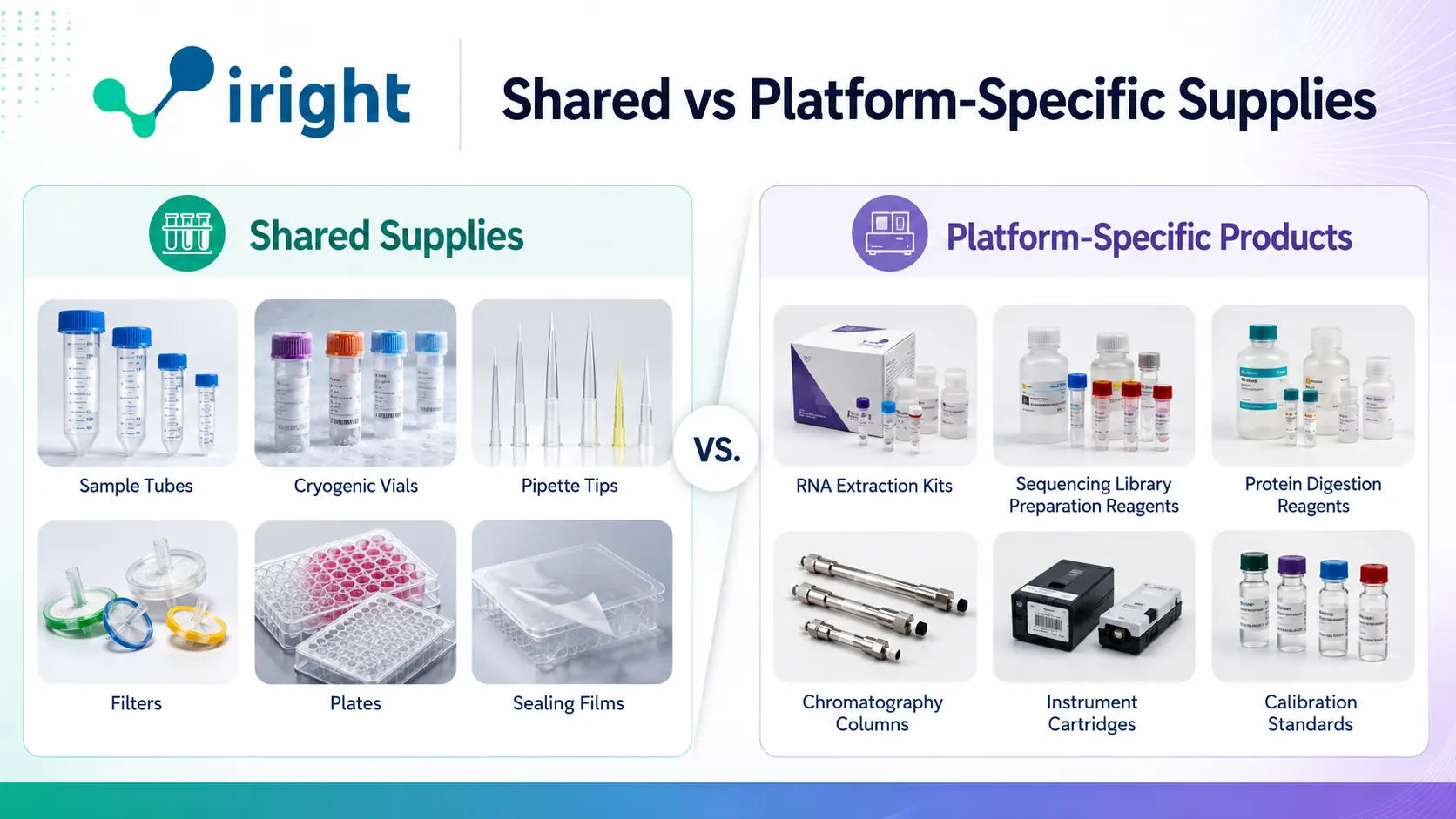
This separation allows you to consolidate common supplies without assuming that platform-specific products are interchangeable.
It can also reveal opportunities to reduce the number of separate orders. For example, you may be able to source tubes, pipette tips, filters, solvents, and storage products together, while purchasing specialized sequencing or analytical products according to the validated protocol.
Identify Dependencies Between Workflow Stages
A workflow map should show more than a list of products. It should also show how each stage affects the next.
Review dependencies such as:
Collection tube and stabilization reagent compatibility
Sample volume and extraction kit input range
Extract purity and downstream enzyme performance
Buffer composition and analytical platform requirements
Tube material and low-concentration sample recovery
Storage conditions and analyte stability
Extraction method and required DNA fragment length
Plate type and instrument compatibility
Filter membrane and solvent compatibility
Mark products as workflow-critical when a mismatch or delivery delay could stop several downstream processes.
This step is particularly important before you request alternative products. A product that appears equivalent by name may differ in membrane material, binding capacity, purity grade, working volume, chemical resistance, or supported application.
Build a Sample Preparation Strategy for Multiple Assays
Sample preparation is where a multiomics workflow either becomes coordinated or begins to fragment. You need to decide whether each analysis will use separate aliquots, sequential extraction, or a combined extraction method while protecting the quality requirements of every downstream assay.
Compare Separate and Combined Extraction Approaches
One approach is to divide the original sample into separate aliquots and use a dedicated extraction process for each analyte.
This gives you greater control over DNA, RNA, and protein preparation. You can select reagents according to the exact requirements of each method and troubleshoot each process independently.
However, separate extraction may:
Require more original sample
Increase tube and label use
Add handling steps
Create differences between aliquots
Increase storage requirements
Require more individual kits and consumables
Another option is combined or sequential extraction, where you obtain several analytes from the same starting sample.
This can help you use limited samples more efficiently and reduce biological differences between separate aliquots. However, the workflow may be more complicated, and you may need to balance the recovery, purity, or stability requirements of different analytes.
Do not assume that a product is suitable simply because it is marketed for multiomics use. Review the supported sample types, input amount, extraction chemistry, expected output, downstream applications, and validation data.
Where possible, test the planned method with representative samples before committing to large quantities.
Coordinate Collection, Stabilization, and Storage
Collection products should not be purchased separately from stabilization and storage materials.
Before placing an order, verify:
Whether the collection container supports your sample type
Whether the stabilization chemistry affects downstream assays
Whether the container is suitable for the required temperature
Whether low-binding materials are needed
Whether nuclease-free products are required
Whether the closure system can withstand transport and storage
Whether the product can be labeled or tracked reliably
Whether the storage format fits your freezer or automated system
You should follow your validated protocol, institutional procedures, and the manufacturer’s instructions for storage temperature, processing time, and sample handling. These conditions vary across specimen types, extraction methods, and analytical platforms.
Iright supplies sample collection products, centrifuge tubes, cryogenic storage products, filtration materials, pipette tips, and other laboratory consumables across multiple brands. When your preferred product is unavailable or has a long lead time, Iright can help you identify potential alternatives for technical review rather than leaving you to search unrelated catalogs individually.
Ask Iright to compare collection, storage, and sample preparation options across available brands.
Include Quality-Control Materials in Your Initial RFQ
Quality-control products are often treated as secondary purchases, but they should be included in your initial sourcing plan.
Depending on your workflow, you may need:
DNA or RNA quantification reagents
RNA quality assessment products
DNA integrity or size-analysis supplies
Protein quantification assays
Calibration reagents
Reference materials
Positive and negative controls
Assay-specific standards
Instrument qualification products
Purchasing these products early helps you confirm whether their storage, shipping, expiry, and batch requirements align with the main workflow.
It also prevents a situation where your extraction or library preparation reagents arrive, but you cannot qualify the samples before using them.
Source RNA-Seq Supplies as a Connected System
An RNA-seq workflow involves considerably more than an RNA isolation kit. RNA stability, contaminant removal, library preparation, indexing, cleanup, and quality assessment need to work together, so you should evaluate the sequence of products rather than selecting each item independently.
Plan RNA Collection and Stabilization
RNA begins degrading when collection and processing conditions do not protect it adequately. Your collection strategy should account for the sample type, expected processing delay, storage conditions, and downstream sequencing requirements.
Blood, tissue, and cultured cells may require different collection and stabilization approaches. Products intended for one sample type should not automatically be used for another.
Before selecting a product, confirm:
Supported specimen types
Maximum recommended processing delay
Required transport conditions
Storage limitations
Compatibility with the intended extraction method
Compatibility with downstream RNA analysis
Whether the product is intended for research use or another specified use
When working with limited or difficult samples, also consider tube binding characteristics, dead volume, and the number of transfers required.
Select RNA Extraction and Cleanup Products
RNA extraction products vary by chemistry, format, sample input, throughput, and automation compatibility.
You may need to compare:
Column-based extraction
Magnetic bead-based extraction
Organic extraction methods
Total RNA isolation
Enrichment of specific RNA fractions
DNase treatment
Inhibitor removal
Concentration and cleanup products
Manual and automated formats
Review the manufacturer’s stated input range, expected yield, purity, elution volume, supported sample types, and downstream compatibility.
Residues such as salts, ethanol, proteins, or extraction chemicals may affect reverse transcription, amplification, library preparation, or quality measurement. Selecting a product based only on total yield can therefore give you an incomplete picture.
Prepare Library and Supporting Consumables
Your RNA-seq purchasing list may also include:
Library preparation reagents
Indexing or barcoding components
Reverse transcription reagents
PCR reagents
Magnetic cleanup beads
Nuclease-free tubes
Low-retention pipette tips
Reaction plates
Plate seals
Library quantification products
Library quality-control supplies
Before replacing a library preparation component, confirm the sequencing platform, protocol version, sample input, read design, indexing system, and required performance.
Some general consumables may offer sourcing flexibility, while proprietary or protocol-dependent components may require stricter compatibility review.
Iright can support RNA-seq procurement by helping you consolidate extraction reagents, cleanup materials, general consumables, and related laboratory products into one RFQ. You can also request availability checks or possible alternative brands when a specified item has an unsuitable lead time.
Coordinate Proteomics Consumables with Your Analytical Method
Proteomics introduces a different set of compatibility concerns, particularly around protein solubilization, digestion, cleanup, separation, and instrument analysis. Your sourcing plan should connect the biological sample, preparation chemistry, analytical method, and required sensitivity from the beginning.
Match Protein Extraction to Downstream Analysis
Protein extraction products should be selected according to the type of protein you want to recover and the method you will use afterward.
Consider:
Sample type
Target protein class
Cellular location
Native or denaturing conditions
Required protein concentration
Detergent concentration
Salt content
Protease or phosphatase inhibition
Downstream digestion
Chromatography requirements
Mass spectrometry compatibility
A buffer may extract proteins efficiently but introduce components that interfere with digestion, ionization, labeling, separation, or detection.
You should therefore evaluate extraction performance and downstream compatibility together.
Plan Digestion, Reduction, Alkylation, and Cleanup
A proteomics preparation workflow may require:
Proteolytic enzymes
Reducing reagents
Alkylating reagents
Protein concentration products
Desalting products
Solid-phase extraction products
Filtration devices
Low-protein-binding tubes
Low-retention tips
Sample plates
Reagent grade, storage stability, lot consistency, and documentation can be important when you are comparing products across manufacturers.
For long-term or multi-batch studies, check whether the supplier can provide adequate shelf life, batch information, certificates, and continued availability.
Include Separation and Instrument Consumables
Depending on your analytical method, you may also need:
Chromatography columns
Guard columns or cartridges
Sample vials and caps
Syringe or membrane filters
Analytical solvents
Mobile-phase additives
Sample plates
Instrument-specific consumables
Calibration products
Reference materials
Check dimensions, pressure limits, solvent resistance, particle size, pore size, fitting compatibility, and recommended applications before selecting a column or filtration product.
Iright supplies analytical products, chromatography supplies, filters, solvents, vials, general laboratory consumables, and sample preparation products from multiple brands. This can help you compare several workflow components through one sourcing request instead of managing a separate search for every product category.
Request a consolidated proteomics workflow quote from Iright.
Account for Long-Read Sequencing Requirements
Long-read sequencing can place stricter demands on DNA integrity than many routine short-read applications. When long-read data is part of your multiomics study, you need to protect high-molecular-weight DNA during collection, extraction, handling, storage, cleanup, and quality assessment.
Protect High-Molecular-Weight DNA
DNA can become fragmented through inappropriate mixing, repeated transfers, unsuitable extraction conditions, or excessive freeze-thaw cycles.
Your workflow may need to reduce:
Aggressive vortexing
Unnecessary pipetting
Use of unsuitable narrow-bore tips
Repeated sample transfer
Extended handling
Inappropriate storage
Repeated freezing and thawing
The exact handling requirements should follow the sequencing platform, library preparation method, and validated laboratory protocol.
Products used successfully for routine DNA extraction may not necessarily preserve the fragment sizes required for long-read analysis.
Review Extraction and Size-Selection Compatibility
Before purchasing long-read sequencing supplies, check:
Supported sample type
Required starting amount
Expected DNA yield
Expected fragment size
Purity requirements
Inhibitor removal
Elution volume
Manual or automated processing
Size-selection method
Library preparation compatibility
Recommended quality-control method
The 2026 All of Us dataset release included long-read whole-genome sequences from more than 14,500 participants alongside short-read genomic, RNA-seq, and proteomics data, demonstrating how long-read information can become part of a broader integrated research resource.
When sourcing products for this workflow, avoid choosing extraction or cleanup products solely because they are listed under general DNA preparation. Confirm whether their documented specifications support the fragment integrity and purity required by your method.
Decide Where Cross-Brand Sourcing Is Appropriate
A complete multiomics workflow rarely needs to come from one manufacturer. Cross-brand sourcing can improve product availability and budget flexibility, but only when you distinguish interchangeable general supplies from validated, platform-dependent, or method-critical products.
Identify Products with Greater Sourcing Flexibility
Some general products may have several possible suppliers, including:
Standard laboratory tubes
Selected pipette tips
General storage containers
Selected filters
Common laboratory plastics
Basic solvents
General buffers
Non-proprietary accessories
Even for these products, you should compare more than the product name.
Check:
Material
Dimensions
Working volume
Sterility
Purity
Binding characteristics
Temperature range
Chemical resistance
Packaging format
Instrument fit
A tube or filter that looks similar may behave differently when used with low-volume samples, aggressive solvents, freezing conditions, or automated equipment.
Apply Stricter Review to Method-Critical Products
Other products require more careful evaluation, including:
Proprietary assay kits
Sequencing library preparation reagents
Instrument cartridges
Specialized chromatography columns
Calibrated standards
Software-linked products
Reagents specified by validated methods
Products used in regulated workflows
Changing these products may require comparison testing, protocol adjustment, method verification, or formal revalidation.
Neither Iright nor another sourcing supplier should determine compatibility on your laboratory’s behalf. However, Iright can help you collect product specifications, locate documentation, compare available formats, and identify the differences your technical team should evaluate.
Compare Alternatives by Specification
Use a structured comparison instead of relying on similar product names.
Comparison area | What you should verify |
|---|---|
Application | Supported sample, method, and workflow stage |
Format | Kit, reagent, membrane, bead, column, plate, or cartridge |
Input range | Supported volume, mass, or concentration |
Performance | Yield, purity, recovery, sensitivity, or capacity |
Platform compatibility | Instrument, protocol, and software requirements |
Material | Polymer, glass, membrane, coating, or surface treatment |
Storage | Required temperature and shelf life |
Shipping | Ambient, refrigerated, frozen, or hazardous handling |
Pack size | Suitability for planned batches |
Documentation | Protocol, CoA, SDS, and supporting data |
Availability | Current stock and expected lead time |
Lot continuity | Support for long studies or repeated batches |
When you contact Iright about an alternative, provide the original manufacturer, catalog number, application, sample type, required quantity, and any specifications that cannot change. This gives the sourcing team a clearer basis for identifying products worth reviewing.
Ask Iright to locate potential alternatives for a difficult-to-source laboratory product.
Balance Compatibility, Lead Time, and Total Workflow Cost
The lowest unit price does not always produce the lowest project cost. You should compare how each sourcing option affects method verification, staff time, shipping, storage, batch continuity, instrument scheduling, and the risk of repeating an experiment.
Look Beyond the Listed Product Price
Your total workflow cost may include:
Minimum order quantities
Several separate shipments
Cold-chain fees
Hazardous-material handling
Import or regional delivery requirements
Products expiring before use
Unsuitable pack sizes
Additional validation work
Repeat experiments
Delayed instrument bookings
Administrative time spent coordinating suppliers
A larger pack may offer a lower cost per reaction but become uneconomical when your study volume is small or the product has a short usable life after opening.
Similarly, a lower-priced alternative may not create savings when it requires substantial method redevelopment.
Identify Critical-Path Products
Classify your supplies according to the effect of a delay.
Critical-path products have no immediately approved substitute and can stop the workflow. These may include specific library kits, proprietary cartridges, specialized columns, standards, or instrument-dependent products.
Conditionally substitutable products have possible alternatives, but the replacement may require technical review or comparison testing.
General supplies often have several sourcing options, although their physical and chemical specifications must still be checked.
Confirm the lead time for critical products before scheduling samples or reserving instrument time. For longer studies, you may also need to assess shelf life, batch availability, and the risk of discontinuation.
Iright can help you request availability and estimated lead times across a multi-product list. Where one product creates a supply bottleneck, you can also ask for potential alternatives to review before the project reaches that stage.
Consider Lot Consistency
Lot continuity can matter when you are running:
Longitudinal studies
Multi-site research
Large sample cohorts
Repeated experimental batches
Quantitative comparative analyses
Validated analytical methods
Ask whether the required quantity can be supplied from one lot, whether a lot reservation is possible, and what documentation is available.
You should also record formulation changes, manufacturing updates, and product discontinuations throughout the study.
Prepare a Complete Multiomics RFQ
A well-structured RFQ helps suppliers compare suitable products instead of returning a long list of loosely related catalog numbers. You should provide enough technical and logistical detail to evaluate compatibility, availability, documentation, and alternatives within the same review cycle.
Include the Necessary Technical Information
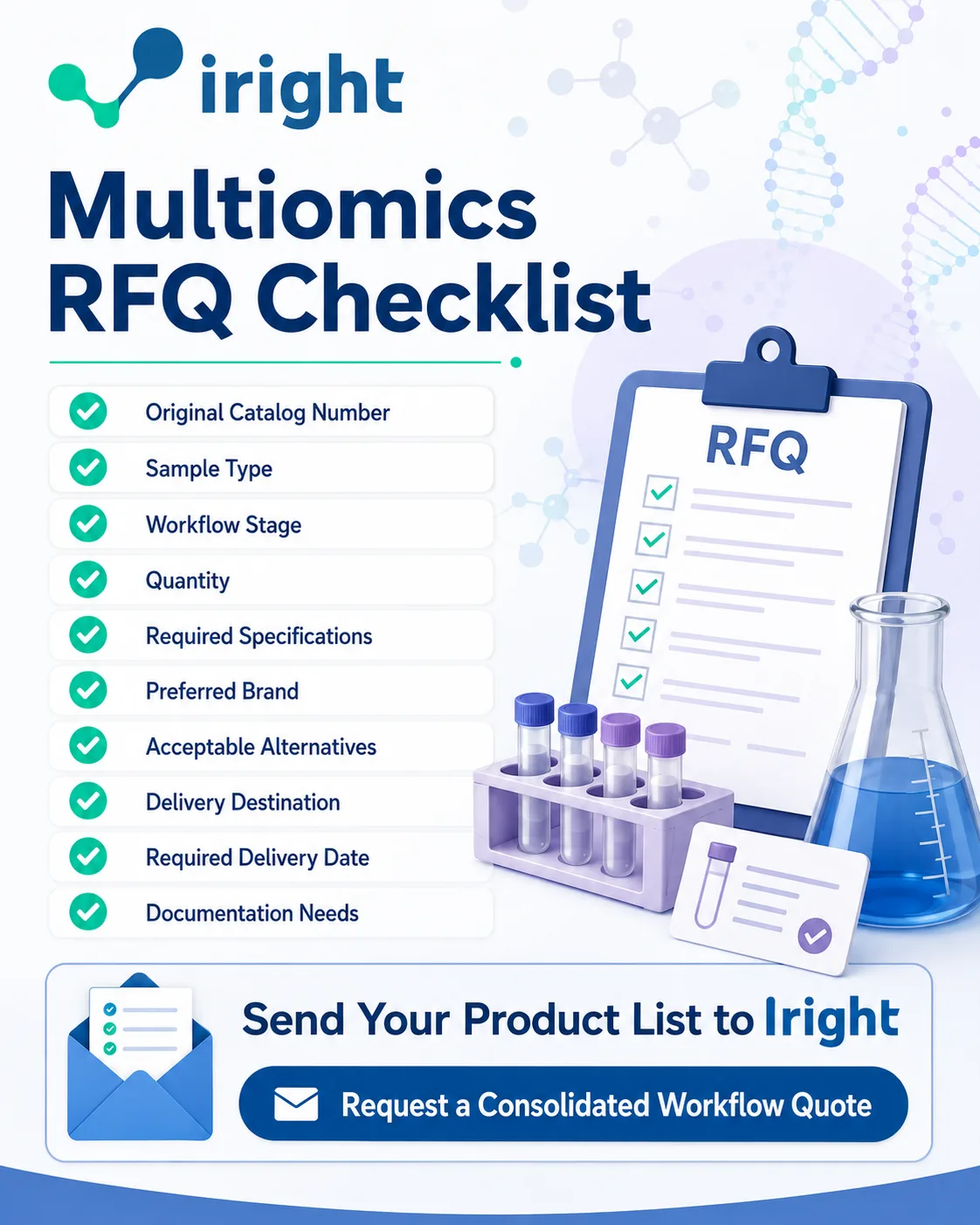
Provide:
Sample type
Target analyte
Planned assay or analytical platform
Workflow stage
Required specification
Original manufacturer and catalog number, when available
Estimated sample count
Expected number of runs
Required product format
Preferred pack size
Purity or sterility requirements
Manual or automated processing requirements
Acceptable alternative brands
Specifications that cannot change
Do not rely on a product name such as “RNA extraction kit” or “protein filter.” These categories can contain products designed for very different samples, volumes, instruments, and applications.
Include Commercial and Delivery Requirements
Your request should also state:
Delivery destination
Required delivery date
Estimated order quantity
Potential annual quantity
Preferred shipment schedule
Cold-chain requirements
Documentation requirements
Whether partial shipment is acceptable
Whether equivalent products may be quoted
Whether you want a consolidated shipment
The more specific the request, the easier it is to distinguish a useful option from a merely similar product.
Ask the Right Questions About Alternatives
Before approving an alternative product, ask:
Which specifications match the original product?
Which specifications are different?
Does the manufacturer document the intended application?
Is the product suitable for the planned sample type?
Does the replacement require a protocol change?
Is additional verification recommended?
What quality and technical documents are available?
Is the quoted lead time current?
Can the required quantity be supplied?
Are storage and shipping conditions different?
Is the product expected to remain available?
Is technical support available?
Iright can help structure these requests across sample preparation products, laboratory reagents, consumables, analytical supplies, and multiple manufacturers. Your team remains responsible for final technical evaluation and method validation, while Iright helps simplify the sourcing and quotation process.
How Iright Supports Multiomics Laboratory Procurement
When your workflow includes products from several manufacturers, coordinating individual searches and quotations can slow procurement. Iright helps you organize requirements by workflow stage, compare available products, consolidate RFQs, and identify sourcing questions that need to be resolved before you place an order.
You can use Iright to source or compare:
Nucleic acid extraction and cleanup products
General molecular biology reagents
Sample collection and preparation supplies
Centrifuge tubes and cryogenic storage products
Pipette tips, plates, and laboratory plastics
Filters and filtration devices
Proteomics preparation supplies
Chromatography columns and analytical consumables
Solvents, buffers, and related reagents
Quality-control products
Products from alternative brands
Instead of submitting several disconnected inquiries, you can provide one list containing the original product numbers, preferred brands, sample applications, quantities, and required delivery dates.
Iright can then help you:
Consolidate products into a focused RFQ
Check product formats and pack sizes
Review availability and expected lead times
Locate potential alternative brands
Compare supporting specifications
Coordinate cross-brand sourcing
Reduce the number of separate purchase requests
Potential alternatives should always be reviewed and approved by your laboratory before use. Product equivalence cannot be assumed from a similar description or category alone.
Request Multiomics Workflow Sourcing Support
Send Iright:
Your current product list
Original catalog numbers
Sample types
Workflow stages
Required quantities
Preferred brands
Delivery destination
Required delivery date
Acceptable alternative criteria
Request a Multiomics Workflow Quote
Conclusion
Reliable multiomics sourcing depends on how well you connect sample handling, extraction, quality control, platform-specific products, and general consumables. You should map the entire workflow before comparing catalog numbers, identify critical dependencies, and separate flexible supplies from products that require strict compatibility review. Cross-brand sourcing can improve availability and purchasing flexibility, but each alternative must be assessed by specification and validated for your method. When your list covers several brands or workflow stages, Iright can help you consolidate the request, compare sourcing options, check lead times, and locate potential alternatives for technical review.
Ready to organize your multiomics product list? Submit your requirements to Iright for a consolidated quote.