Description
The 53-7.3 monoclonal antibody specifically binds to a monomorphic epitope of CD5, a member of the scavenger receptor cysteine-rich protein superfamily and the major ligand of CD72, found on thymocytes, T lymphocytes, thymic NKT cells, and a subset of B lymphocytes, but not on NK cells or splenic NKT cells. The level of surface CD5 expression is developmentally regulated in the thymus, starting with low levels on CD4-CD8- thymocytes and increasing as they mature to CD4+CD8+ then CD4+CD8- or CD4-CD8+ thymocytes. Relatively high levels are maintained on peripheral T lymphocytes. The level of CD5 antigen detected on T helper cells has been reported to be somewhat higher than that on T cytotoxic/suppressor and B cells. Few, if any, intestinal intraepithelial lymphocytes bearing the γδ T-cell receptor express CD5. Phenotypic, anatomical, functional, developmental, and pathogenic characteristics of peripheral CD5+ B cells suggest that they may represent a distinct lineage, known as B-1 cells. The frequency of these CD5+ B cells has been reported to show strain-dependent variation. An additional population of CD5+ B lymphocytes resides in the thymus, where it matures from intrathymic B-cell progenitors. It has been proposed that CD5 is a costimulatory molecule which mediates interactions of cells in the immune system and negatively regulates signal transduction mediated by the T-cell receptor and B-cell receptor.
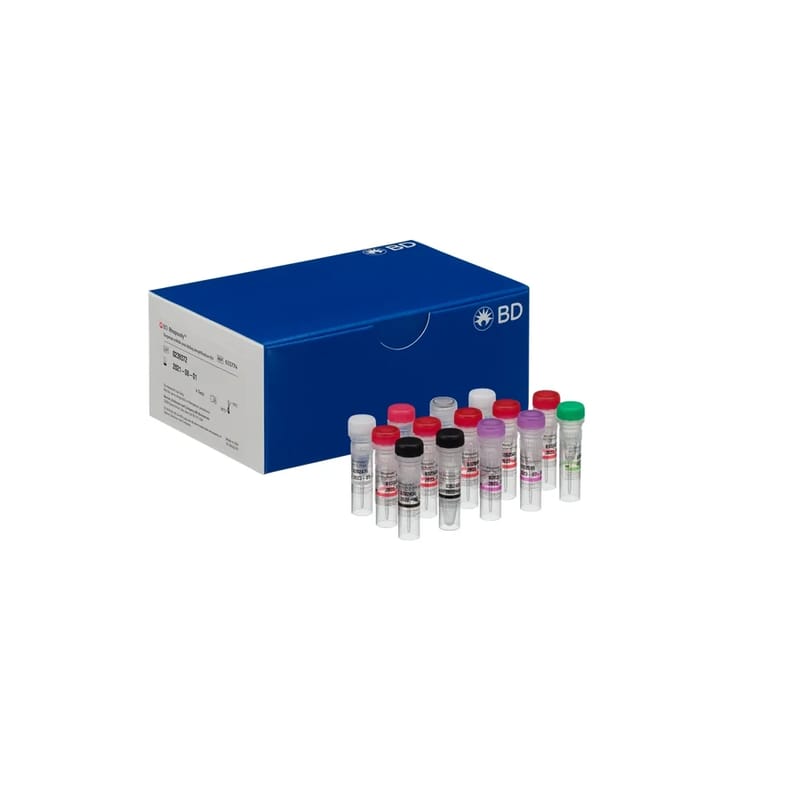
For optimal and reproducible results, BD Horizon Brilliant Stain Buffer should be used anytime two or more BD Horizon Brilliant dyes (including BD OptiBuild Brilliant reagents) are used in the same experiment. Fluorescent dye interactions may cause staining artifacts which may affect data interpretation. The BD Horizon Brilliant Stain Buffer was designed to minimize these interactions. More information can be found in the Technical Data Sheet of the BD Horizon Brilliant Stain Buffer (Cat. No. 563794).
Store undiluted at 4°C and protected from prolonged exposure to light. Do not freeze. The monoclonal antibody was purified from tissue culture supernatant or ascites by affinity chromatography. The antibody was conjugated with BD Horizon BV711 under optimal conditions that minimize unconjugated dye and antibody.
1. This antibody was developed for use in flow cytometry.
2. The production process underwent stringent testing and validation to assure that it generates a high-quality conjugate with consistent performance and specific binding activity. However, verification testing has not been performed on all conjugate lots.
3. Researchers should determine the optimal concentration of this reagent for their individual applications.
4. An isotype control should be used at the same concentration as the antibody of interest.
5. Caution: Sodium azide yields highly toxic hydrazoic acid under acidic conditions. Dilute azide compounds in running water before discarding to avoid accumulation of potentially explosive deposits in plumbing.
6. For fluorochrome spectra and suitable instrument settings, please refer to our Multicolor Flow Cytometry web page at www.bdbiosciences.com/colors.
7. Please refer to www.bdbiosciences.com/us/s/resources for technical protocols.
8. BD Horizon Brilliant Stain Buffer is covered by one or more of the following US patents: 8,110,673; 8,158,444; 8,575,303; 8,354,239.
9. BD Horizon Brilliant Violet 711 is covered by one or more of the following US patents: 8,110,673; 8,158,444; 8,227,187; 8,455,613; 8,575,303; 8,354,239.
10. Cy is a trademark of Amersham Biosciences Limited.
11. Alexa Fluor® is a registered trademark of Life Technologies Corporation.