Description
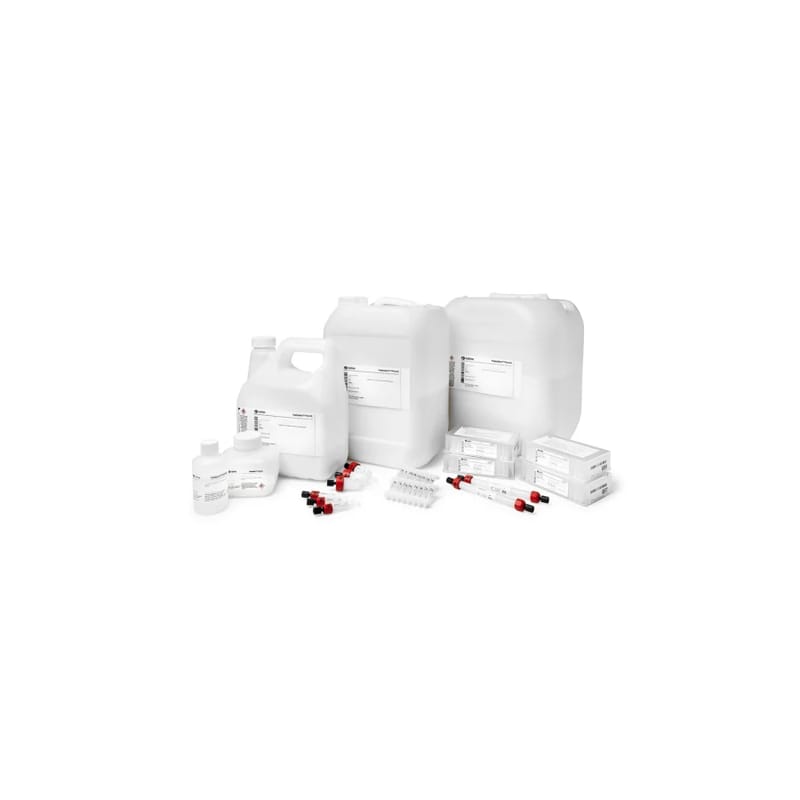
The method uses chaotropic agents and detergents to disrupt protein components to which the cfDNA may initilally bind and to promote the selective binding of this cfDNA to the silica magnetic beads. Proteinase K is used to digest protein from samples; denatured contaminants are easily removed by subsequent washing of the silica beads with specially formulated wash buffers. Proteinase K treatment is also required to release the cfDNA from plasma derived from blood collected in tubes with cfDNA stabilization, such as Cell Free DNA BCT™ (Streck™) for reversal of the stabilization/release of cfDNA. The purified cfDNA is eluted in a low ionic strength buffer, at a concentration suitable for most downstream molecular biology applications, such as next-generation sequencing (NGS). Automation scripts available, please contact Scientific Support . *Sera-Xtracta™ Cell-Free DNA Kit is supported by Cytiva's expertise in Sera-Mag bead technology and is for research use only (RUO). Have you considered your magnetic separation rack? Cytiva’s Magnetic Separation Rack 15 mL is a 3D printed, magnetized tube rack with a strong, removable magnetic force and easy pipette access. It facilitates high capture, retention, and release of magnetic beads from various liquid sample media, allowing high-throughput, parallel processing of up to six 15 mL samples. p>Check out Cytiva Diagnostic Services , helping you build and accelerate the development of smarter molecular and immunodiagnostic assays. Our ISO 13485 accredited manufacturing center of excellence adheres to the standards in the manufacturing process, ensuring the highest quality and compliance with international medical device regulations. Find out more about magnetic separation racks