Loading…
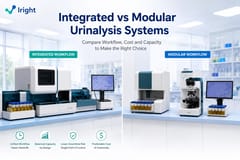
Choosing a urinalysis platform is not simply a choice between two analyzers. You are deciding how urine chemistry, microscopy, reflex rules, manual review, quality control, data transfer, service, an…
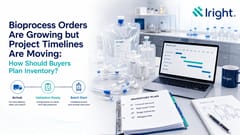
When bioprocess orders rise while customer projects move, you can receive two apparently contradictory signals: demand is strengthening, yet near-term shipments or supplier revenue do not move in ste…
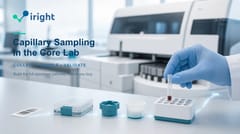
Adding capillary sampling to an established core laboratory can look deceptively simple: keep the analyzer, change the collection device, and begin testing smaller specimens. In practice, you are add…
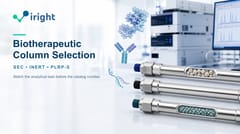
When you buy a chromatography column for a biotherapeutic workflow, you are not buying a generic tube filled with stationary phase. You are choosing how your method will separate aggregates, recover…
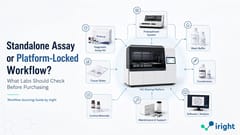
Learn how to assess assay compatibility, platform dependencies, consumables, regulatory limits, and sourcing risks before committing to a diagnostic workflow.
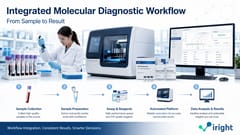
Learn why laboratories are moving beyond individual assay selection and evaluating platform compatibility, automation, workflow efficiency, and sourcing strategies when purchasing molecular diagnosti…
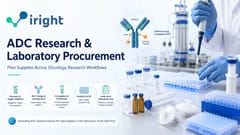
Antibody-drug conjugates (ADCs) continue to attract significant attention across oncology research. On July 6, 2026, Novartis announced an agreement to acquire Myricx Bio, a biotechnology company dev…
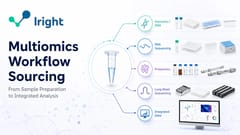
Multiomics research allows you to examine genomic, transcriptomic, proteomic, and other biological information within a connected study. However, combining these methods also makes laboratory procure…
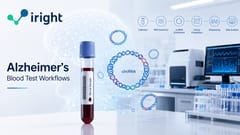
Alzheimer’s blood testing is moving beyond the question of whether amyloid pathology is present. A 2026 NIH-supported study identified a 34-circRNA blood model that performed comparably to pTau217 fo…